Your Q&A Is an Afterthought

Read Time: 7 Minutes
The part of your presentation you spend the least time preparing is the part your audience remembers most.
Q&A.
Most speakers treat it like an afterthought. A box to check. Something to survive before everyone files out.
When Deion Sanders took over as head coach at the University of Colorado, he gave a speech to his new team. The speech itself was strong. But the Q&A? That’s where he showed real command of the room.
I recently broke down the full Q&A on my YouTube channel. Here are the techniques that stood out most, and how you can use them the next time you’re standing in front of a room.
Carve out the time (and don’t let silence scare you)
Most speakers rush past Q&A. They check the clock, ask “any questions?”, wait three seconds in silence, and bail.
Deion does the opposite:
“This is your opportunity. Don’t get outside and start talking when you got me right in front of you.”
He’s not just inviting questions. He’s challenging his team to step up.
And when nobody speaks right away? That’s normal. Your audience isn’t silent because they weren’t listening. They’re silent because speaking up in front of a group is scary. Nobody wants to break the ice.
If you’ve ever sat in a corporate all-hands where 400 people suddenly find their laptops fascinating the moment the CEO asks for questions, that’s the same thing. Nobody wants to go first.
So keep encouraging them. The first question is the hardest one to get. After that, they flow.
Preempt the question everyone’s already thinking
Here’s the context. Deion had just left Jackson State to take over at Colorado. He was bringing players, coaches, and staff with him. Every current Colorado player sitting in that room was thinking the same thing: am I about to lose my spot to a Jackson State transfer?
Nobody was going to raise their hand and ask that. Too risky. Too vulnerable. So Deion brought it up himself. Before a single hand went up, he started addressing which coaches were staying, which were going, and who he was bringing with him. Then a player asks about the quarterback situation. Deion doesn’t flinch:
“Quarterback is coming. Yep. About 10 more. I’m coming.”
This works in any setting. If you’re presenting a reorganization, address the layoff fears up front. If you’re pitching a product with a known weakness, call it out before the client does.
This is one of the biggest shifts I see with students I work with in ISA. Going from reactive to proactive in Q&A. When you address the elephant in the room before anyone asks, you look prepared. When you dodge it and someone forces the issue, you look evasive.
Reframe your core message (don’t just repeat it)
In Part 1 of his speech, Deion’s core message was two words: “I’m coming.” It signaled the winning culture he was bringing to Colorado.
During Q&A, he shifts it:
“They’re coming.”
Not “I’m coming” again. They’re coming. The boosters, the trainers, the coaching staff. People who buy into the vision are showing up.
That’s a reframe, not a restatement. Same core idea, different angle. It adds depth instead of just volume.
Repetition can sound like you’re stuck on one note. Reframing sounds like your idea has layers.
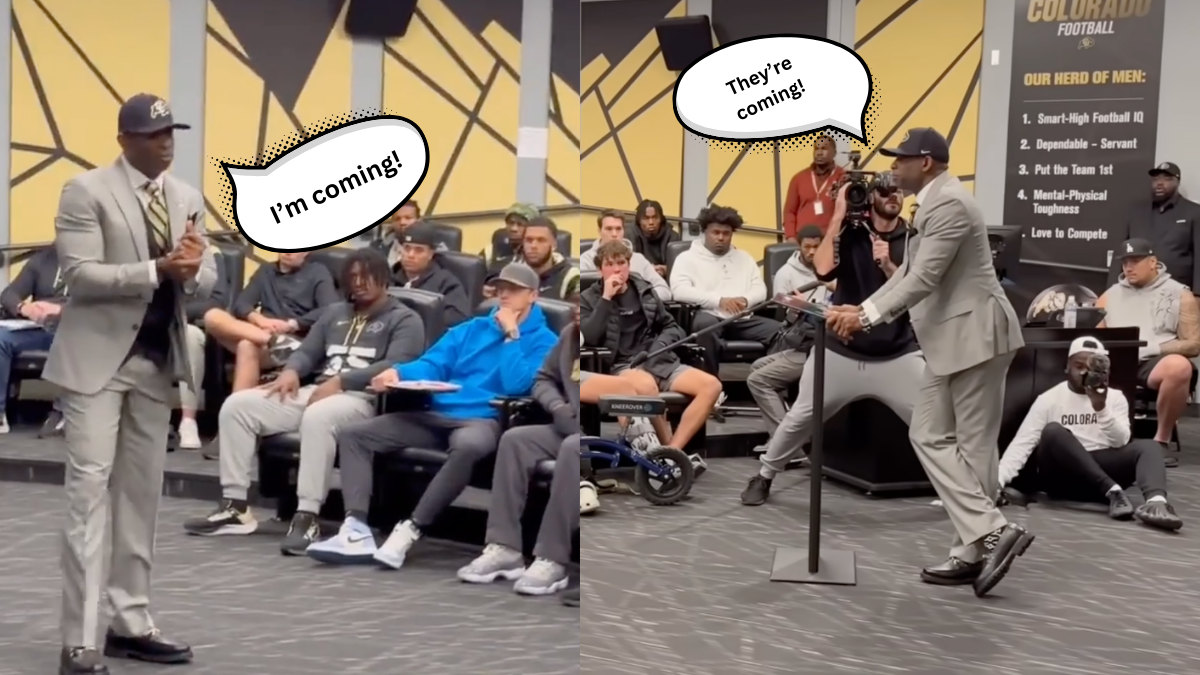 “I’m coming” became “They’re coming.” Same message, bigger picture.
Invite an ally to answer
This one is underused.
When a player asks about the defensive backs coaching, Deion doesn’t just answer himself. He turns to Coach Kevin Mathis and lets him speak.
The entire team physically turns their heads toward Mathis. The energy in the room shifts.
Three things happen when you bring in an ally:
- The audience re-engages. A new voice breaks the pattern.
- Your credibility goes up. Having someone else back your point lands harder than repeating it louder yourself.
- You get material to build on.
That third one is the real unlock. Deion listens to Mathis talk about huddle preparation time, then picks up on that detail to deliver one of his strongest lines of the entire speech:
“How am I going to invest in you if you aren’t going to invest in yourself?”
He couldn’t have landed that without Mathis setting it up. The ally didn’t just support the message. He gave Deion ammunition.
One thing: brief your ally in advance. You want someone who’s going to reinforce your point, not freelance.
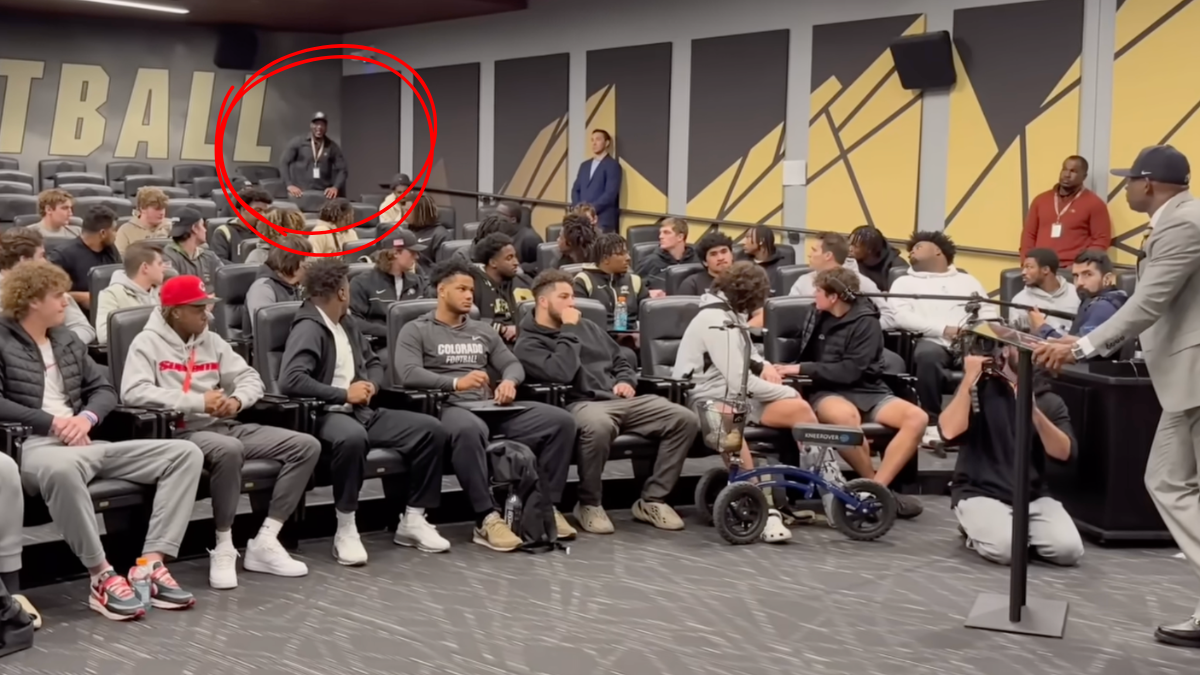 The whole room shifts when a new voice enters the conversation.
Acknowledge what you don’t know
A player asks about the strength staff. Deion’s answer:
“I haven’t made that distinctive decision yet.”
That’s it. No rambling. No trying to construct an answer he doesn’t have.
Most speakers panic when they get a question they can’t answer. They fill the silence with vague non-answers, hoping nobody notices. Everyone notices.
When you admit what you don’t know, you build trust. It makes everything else you said more credible, because the audience knows you’re not making things up on the spot.
Say what you know. Flag what you don’t. Move on.
End Q&A with the key takeaway
The audience’s attention peaks at two moments: the beginning and the end. Most speakers waste the ending by trailing off with “okay, well, if there are no more questions…”
Deion ends with his core message. Then he does something better. He gets his players to say it with him:
“One, two, three —”
“I’M COMING.”
When your audience says your message out loud, it sticks differently than when they just hear it. It becomes theirs.
You don’t need a team chant to pull this off. But make sure the last thing your audience hears is the one thing you want them to remember. Don’t let your Q&A trail off on a random follow-up about parking logistics.
I broke down the full Deion Sanders Q&A in this video. It covers a few more techniques I didn’t get into here, including how to pause before answering tough questions and how to show authority by letting others speak for your credibility.
The next time you’re preparing for a presentation, spend as much time on Q&A as you spend on the talk itself. Write down the five questions you’re most likely to get. Decide who in the room can back you up. Plan your closing line.
The speech gets you in the door. Q&A is what they walk out remembering.
Preston
Whenever you’re ready, here are some (free) resources you can check out:
- 7-Day Speaking Course — Daily exercises to build speaking confidence in one week.
- Knowledge Base Guide — Build a personal knowledge base for better thinking and writing.
- Brand Voice Guide — Framework for defining and documenting your brand voice.
Get free weekly communication tips
Actionable speaking and writing advice every Tuesday.
You're in. First email lands shortly.