The Complete 2026 Interview Prep Guide
The Complete 2026 Interview Prep Guide
Read Time: 12 Minutes
Watch the full interview-prep livestream on YouTube.
You have an interview next week, so you open a blank document and start writing answers.
“Tell me about yourself.”
“Tell me about a time you disagreed with someone.”
“Why do you want to work here?”
An hour later, you have 40 answers and still do not feel ready.
I’ve been coaching interview prep for 6 years while running business development at Lucid Software, and this is the full system I give my clients in one sitting.
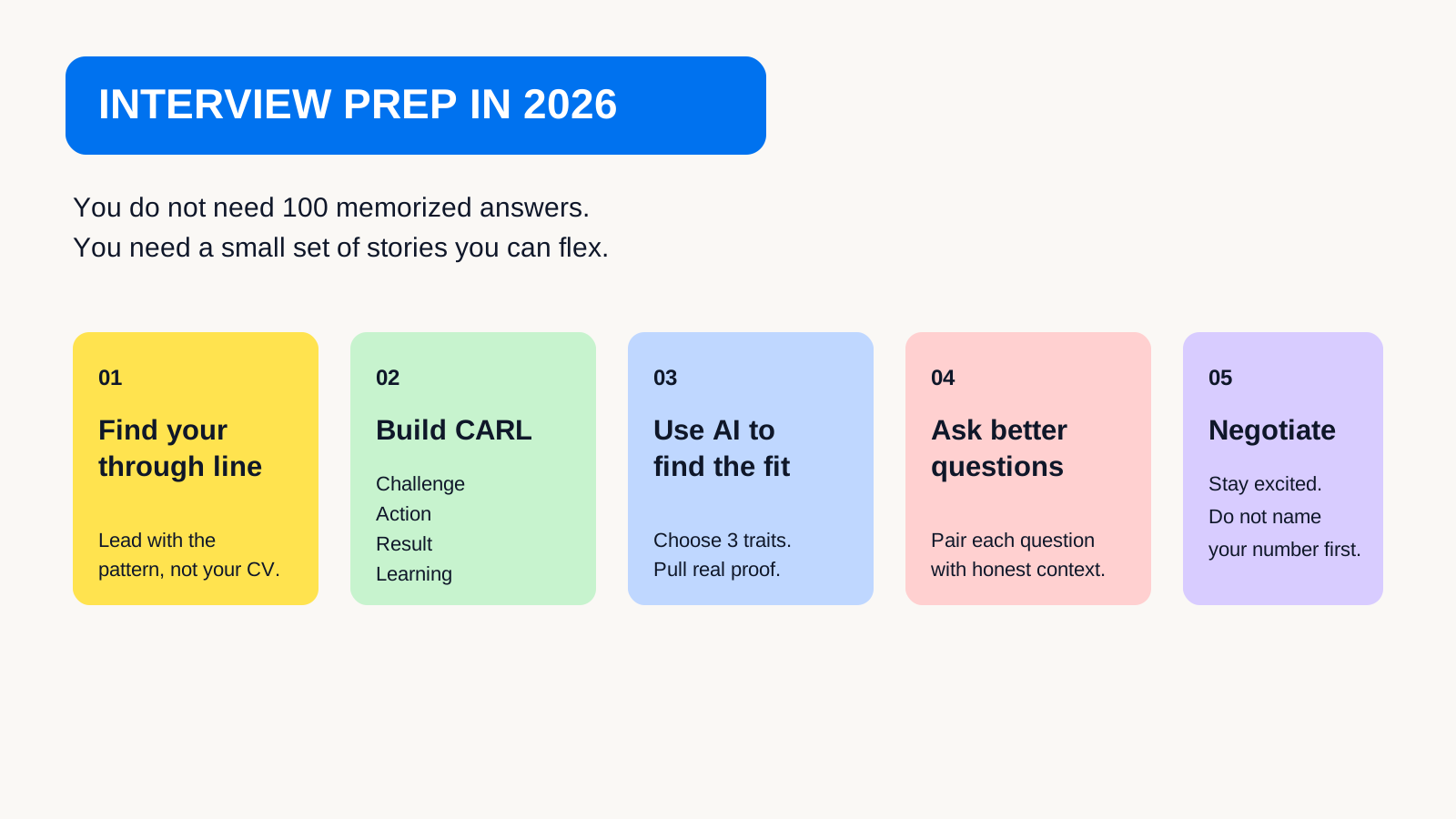
The goal is not to memorize 100 answers.
The goal is to build a small set of stories and a clear point of view that you can carry into almost any question.
If you want the shorter version of this, start with my 3-part guide to crushing your interview.
1. Answer “Tell me about yourself” with a through line
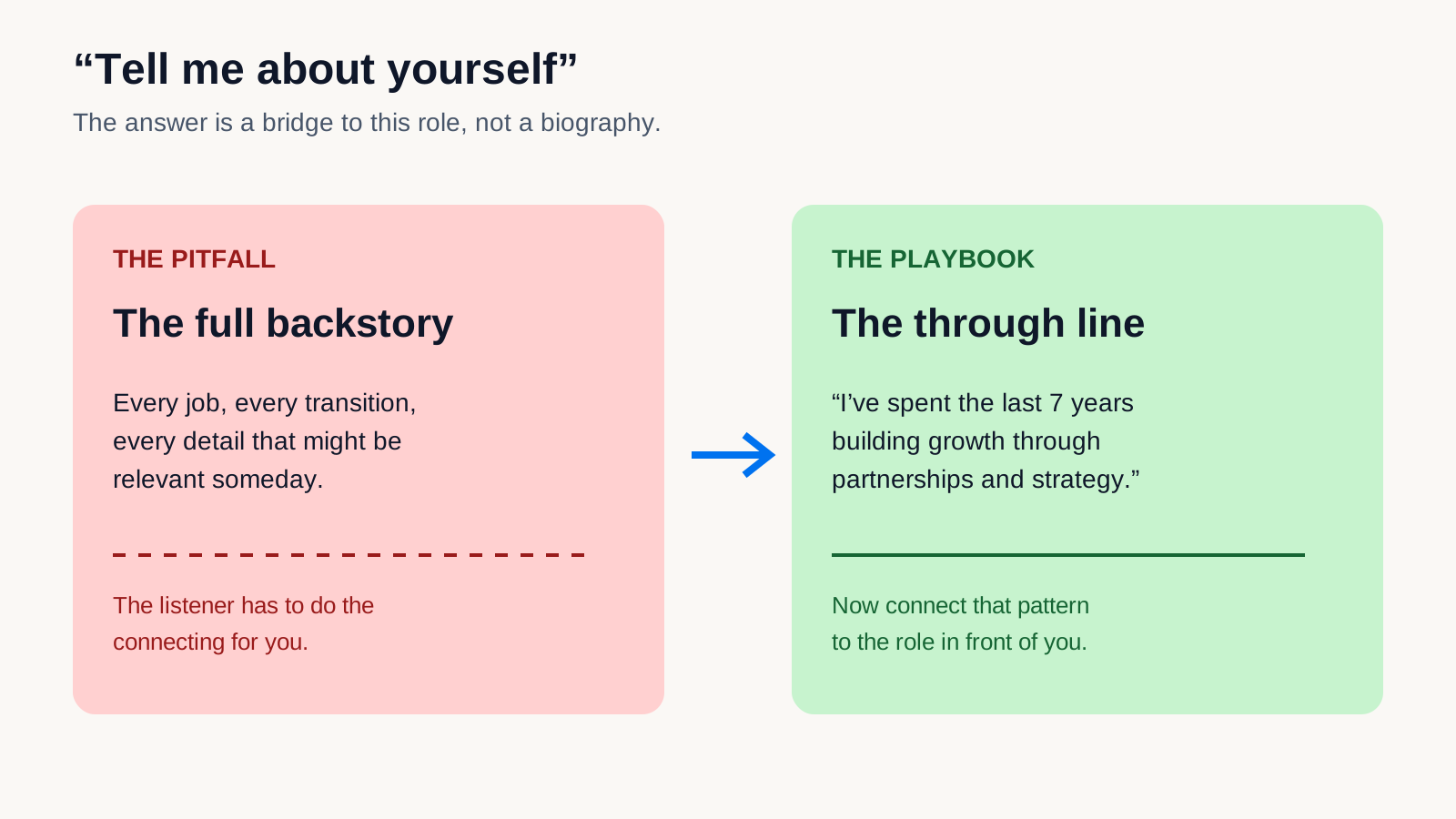
The first mistake people make is treating this question like an invitation to narrate their entire career.
It is not.
The hiring manager is trying to understand what pattern connects your experience to the role in front of them.
So give them that pattern.
“Hi, my name is Preston Chin. I am a marketing and strategy operations leader for the past 7 years, specializing in building partnerships and growth across technology companies.”
Then connect that pattern to the role.
“I’m excited about this marketing strategy role because I see a chance to bring that same experience into a company where the product is helping people learn and grow.”
The exact words will change based on your background, but the shape stays the same:
- Name the professional pattern you want them to remember.
- Give 1 or 2 proof points.
- Explain why this role is the next logical place for that pattern to matter.
There are 2 traps here.
The first is giving your full backstory, which forces the listener to do the connecting for you.
The second is faking why you love the company.
You do not need to pretend you have been a lifelong fan of a product you barely used.
When I interviewed for Lucid, I did not build my answer around using Lucid’s product every day.
I used a competitor and showed how my skill set transferred.
That is the move: connect the company and role to what you actually stand for, then be honest about what you have and have not done.
Relevant experience does not mean identical experience.
If the job description asks for experience building partnerships in education technology and you have built partnerships in software, do not claim you understand the education market if you do not.
Explain the functional match and the learning curve.
2. Build 8 CARL stories instead of memorizing 100 answers
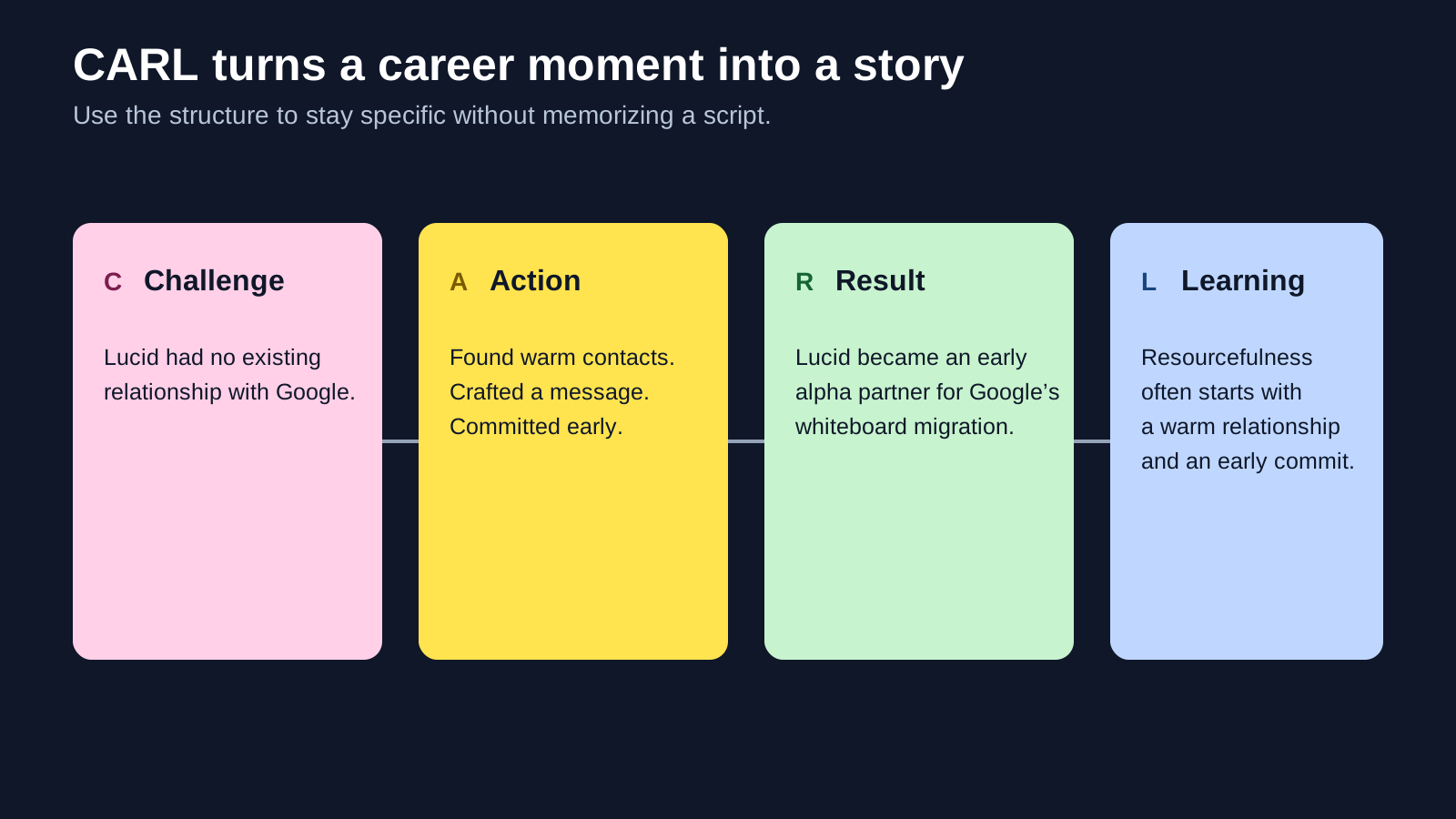
For behavioral questions, I use CARL:
Challenge → Action → Result → Learning
The framework works because it keeps your story from becoming a list of tasks.
The challenge gives the listener a reason to care.
The action shows what you actually did.
The result gives the story weight.
The learning tells them how you think now.
You want roughly 8 stories, with 10 as the upper limit.
Use experiences from the past 3 years when possible, and stretch to 5 years only when the story is still strong and relevant.
Here is one of mine from Lucid.
Challenge: Historically, Lucid had no existing relationship with Google.
Action: I found warm introductions through our existing network, crafted a message that referenced Google’s past partnerships, built the relationship early, committed to an initial action, and communicated the strategy back to leadership.
Result: We became an early alpha partner for Google’s whiteboard migration and built a long-standing relationship with Google.
Learning: Resourcefulness is not just finding a clever idea. It is using warm relationships, committing early, and bringing the rest of the organization with you.
The same story could answer questions about building relationships, working without a playbook, influencing leadership, or handling an ambiguous goal.
That is why you build stories instead of answers.
For each story, write down the question types it can serve.
Then practice the story out loud in 3 minutes.
Do not practice only in your head.
Your brain will tell you the story is obvious, then your mouth will discover that the middle is missing.
3. Pick 3 traits you want them to remember
Your story bank still needs a point of view.
Before each interview, choose 3 traits you want the hiring manager to associate with you.
They might be strategic, entrepreneurial, and a relationship-builder.
They might be analytical, resourceful, and calm under pressure.
The right traits have to pass 2 tests:
- They are authentic to your background.
- They are likely to matter to this audience and role.
Then attach 3 real stories to each trait.
That gives you a simple preparation grid:
Trait → proof point → story → question it can answer
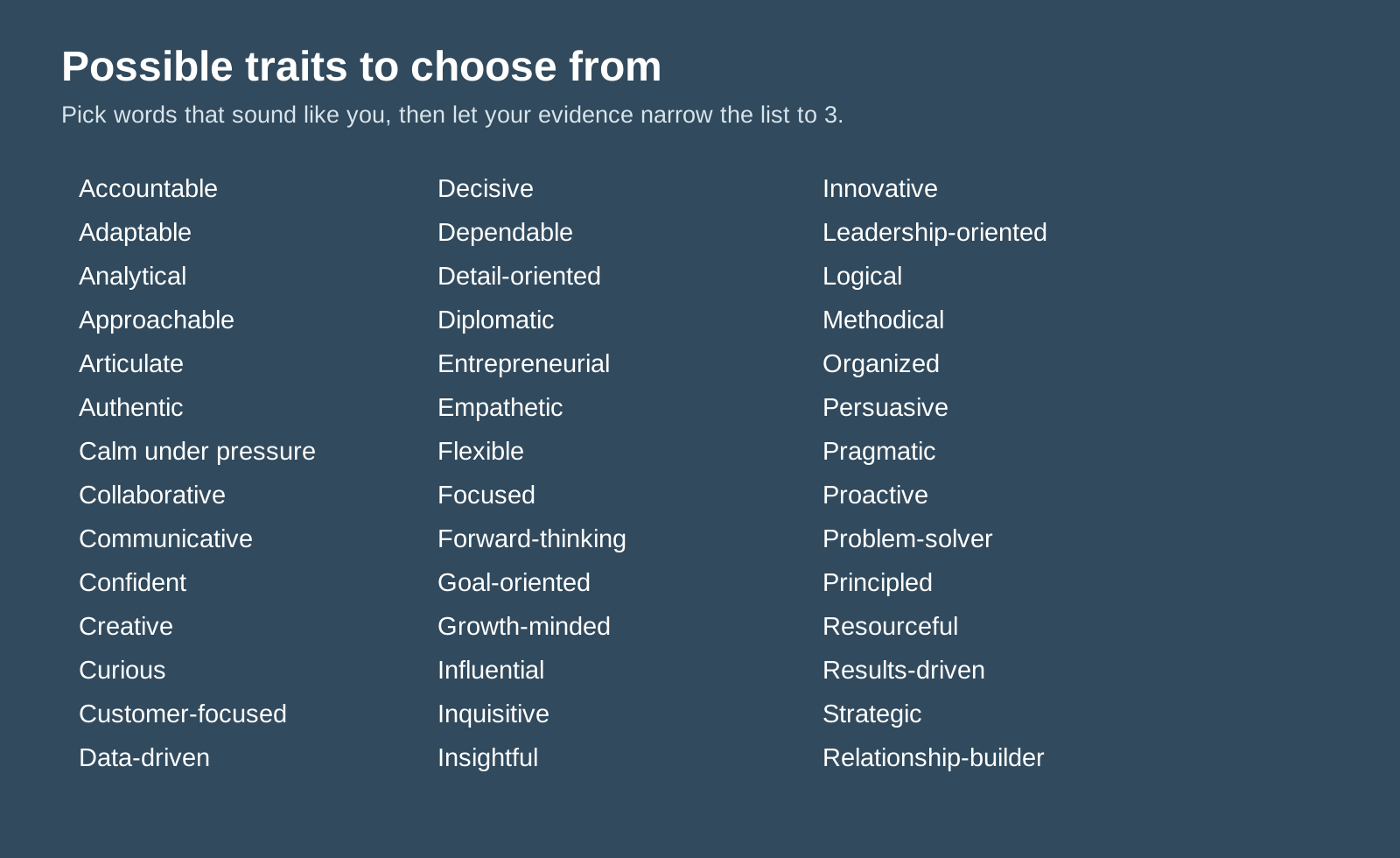
Start with a list of traits you can choose from. You don’t need to pick the traits alone.
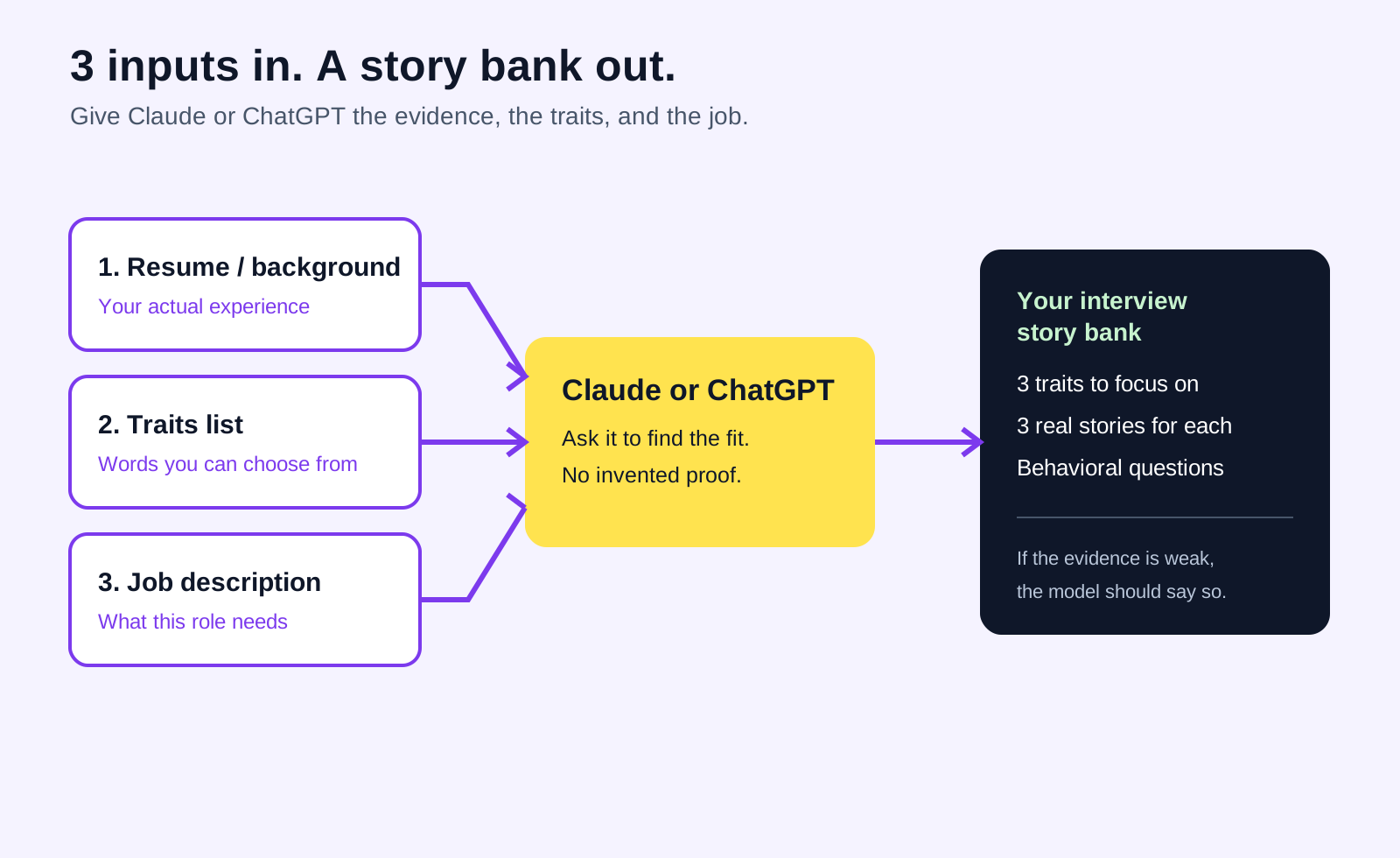
Use your resume or background, the traits list, and the job description as the 3 inputs.
Put all 3 into Claude or ChatGPT. Ask it to return 3 traits to focus on, 3 real proof stories for each trait, and likely behavioral questions to practice.
This is where AI becomes useful.
Not as a ghostwriter that invents a more impressive version of you.
Use it as a pattern finder that searches your resume for evidence you might overlook.
Paste in your resume or background, a list of professional traits, and the job description.
Then use this prompt:
Prompt
I’m preparing to talk about myself in a high-stakes conversation (interview, pitch, intro call — I’ll tell you which). I’m going to share my resume/background and a list of professional traits.
Your job:
- Ask me what kind of conversation this is and who the audience is, if I haven’t said.
- From the trait list, recommend 3 traits that are both authentic to my background and likely to resonate with that audience — explain why each one fits.
- For each trait, pull 3 specific stories or examples from my resume/background that clearly demonstrate it. Cite the actual line or experience, don’t invent anything.
- If my background doesn’t clearly support a trait, tell me — don’t force a fit. Ask me clarifying questions first if you need more context before recommending traits or stories.
The last line is the important one.
If your background does not support a trait, the answer should be “not enough evidence,” not a polished fantasy.
You can also ask AI to generate likely behavioral questions from the job description.
Use those questions to test your story bank, not to create another 100-answer document.
4. Ask the hiring manager questions with context
Your questions at the end of the interview are one of the few moments when the hiring manager gets to see how you evaluate an opportunity.
The question is the information you want. The context is the reason you are asking it.
Add the context because it gives the hiring manager a useful lens for the answer, shows how you think, and gives them a fair chance to tell you the truth about fit.
I would ask these 3.
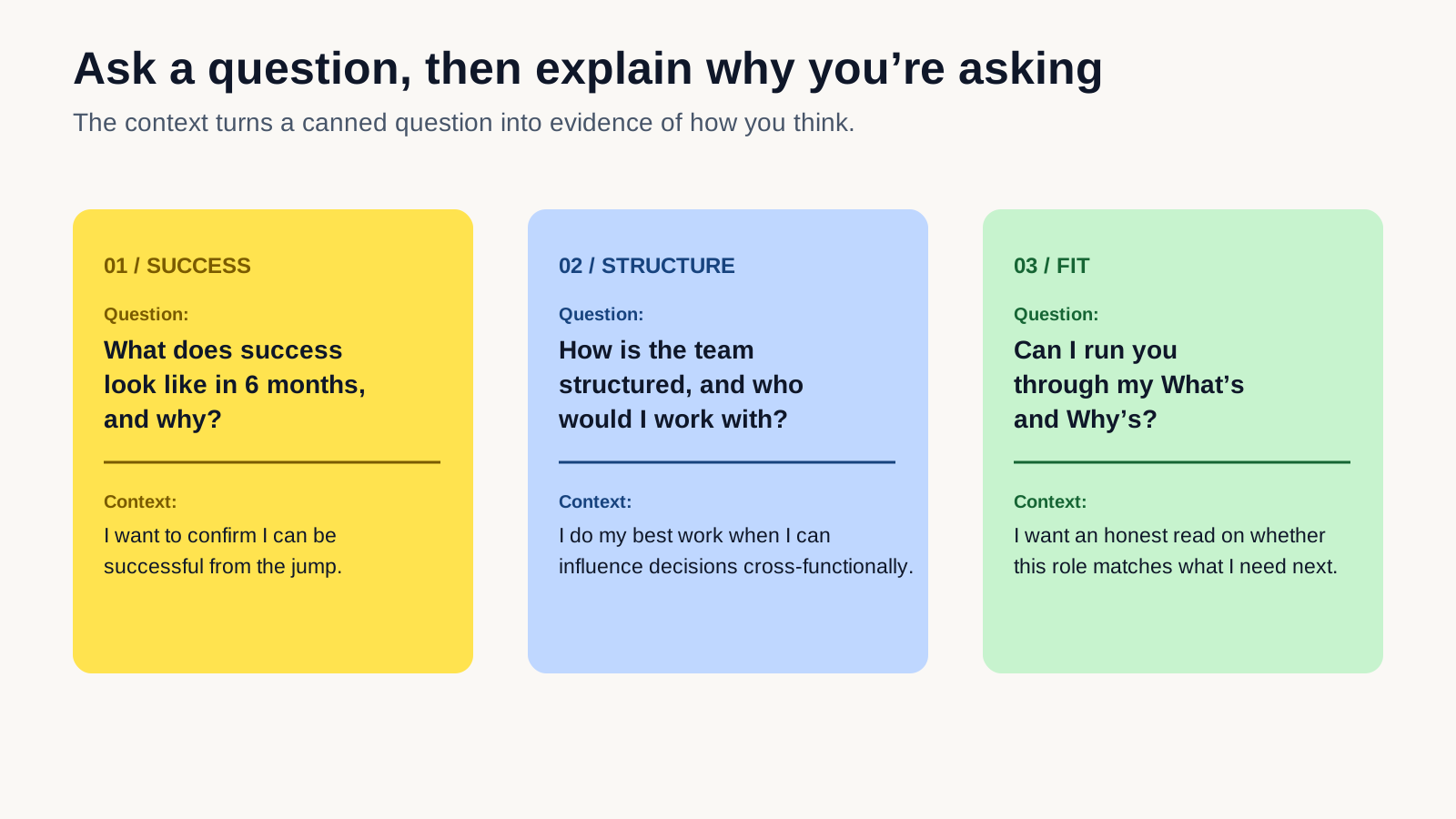
1. What does success look like in 6 months, and why?
Question: What does success look like in 6 months, and why?
Context: “I’m mainly asking because on paper, this role seems to be a great fit, and I want to confirm that I’d be well-equipped to be successful from the jump.”
This tells them you are thinking about contribution and gives them a chance to explain what the role actually needs.
2. How is the team structured, and who would I work with?
Question: How is the team structured, and who would I work with?
Context: “I’m asking because I’ve loved cross-functional work in my previous role, and I feel like I’m at my best when I get the opportunity to influence decisions alongside leadership.”
Now the question connects your working style to the environment you are evaluating.
3. Can I run you through my What’s and Why’s?
Question: Can I run you through my What’s and Why’s?
Context: “I’d love to share the things I’m looking for in my next role and why they matter, then get your honest read on how this role lines up.”
The What’s and Why’s is a short list of 5 things you want in your next role and why each one matters.
Do not make the list generic.
“Good work-life balance” and “good pay” are real needs, but they do not tell the hiring manager much about your decision-making.
Use things that reflect the strengths you want to use, the people you want to work with, or the kind of problems you want to own.
Then score each item by how important it is and how well the role provides it.
This is one of my favorite questions because it helps both sides.
You find out whether the role matches what you need, not only whether you can win the role.
The hiring manager gets to see what motivates you, what conditions help you do your best work, and whether the role can deliver them.
Use it when you have a personal relationship with the hiring manager, came through a warm contact, or built enough rapport that you think they will give you a straight answer.
I walk through the question in this TikTok video.
The What’s and Why’s job hunting template includes a worked example I made when I was applying to Lucid in 2021.
Update your list at least every 6 months, and ideally every 3 or 4 months, because the right next role changes as your work and priorities change.
5. Negotiate without giving them your number first
The negotiation starts before you get the offer.
If a recruiter asks for your salary expectations early, do not volunteer a target number just because the silence feels uncomfortable.
Ask for the range for the role and keep the conversation focused on fit and scope.
When the offer arrives, do not respond immediately.
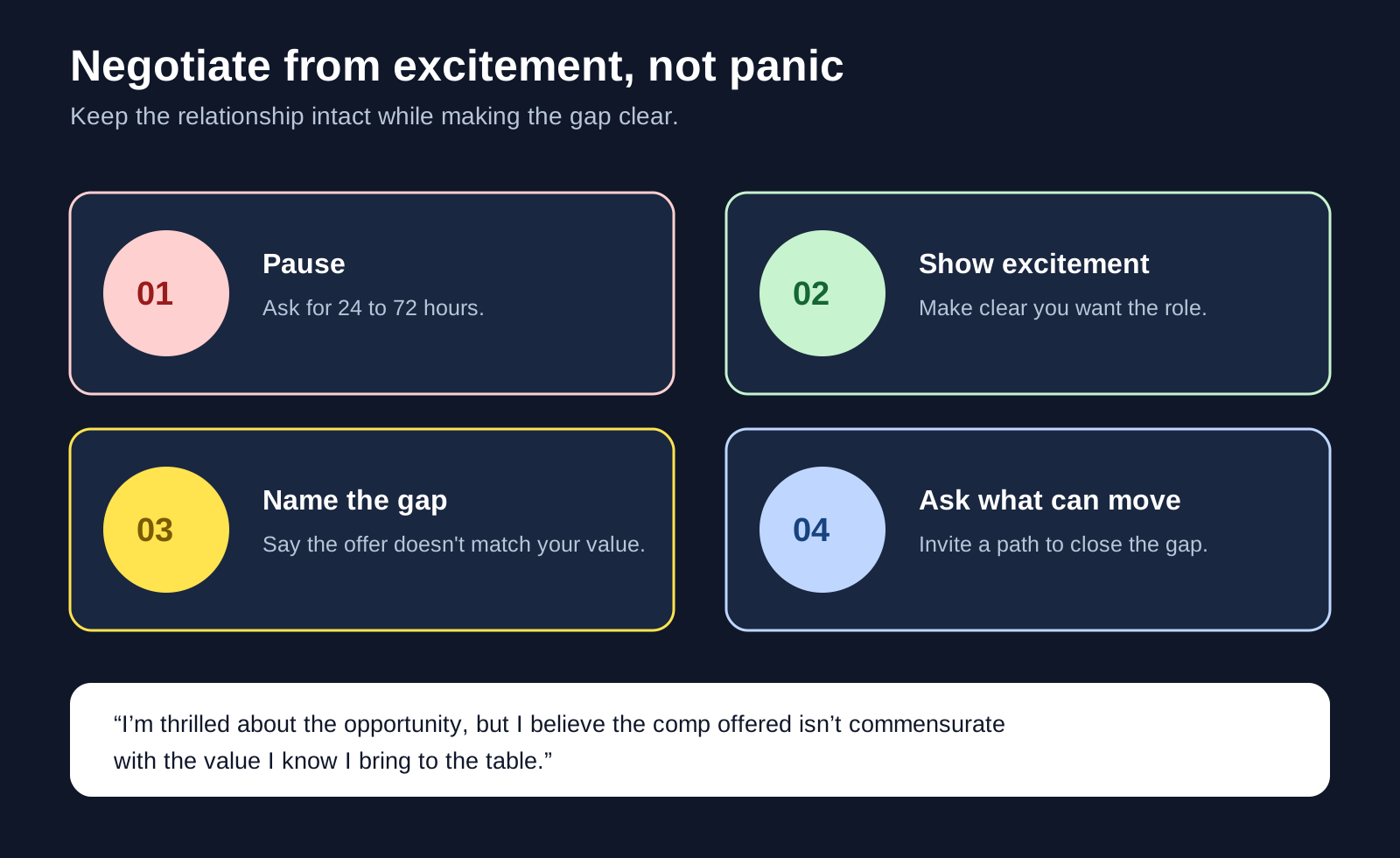
Show gratitude, ask your clarifying questions, and request 24 to 72 hours to review the details.
You also do not have to accept the top of the band as the inevitable outcome.
Here is the language I use:
“I’m thrilled about the opportunity, but I believe that the comp offered isn’t commensurate with the value I know I bring to the table. Is there anything we could do to close the gap and make joining your company a no-brainer decision for me? Because aside from the comp, everything else about this role, the team, the people, the work, and the type of opportunity ahead of us is exactly what I wanted. And if we can find a way to close the gap, I will be absolutely pumped to join.”
Notice what the script does.
It makes your enthusiasm clear before you name the gap.
It asks what is possible instead of issuing an ultimatum.
It gives them a reason to believe you will accept if the gap closes.
You can use a competing offer too, but only if it is real.
Know which role you would choose if compensation were equal.
If the other role is not the one you want, it can still give you useful leverage, but do not lie about its terms or use it to manufacture urgency.
The best negotiation is authentic.
You are not trying to win a performance.
You are trying to find out whether the company can meet the value and expectations you are bringing into the role.
Your prep plan for this week
If your interview is coming up soon, do this in order:
- Write your through line in 2 sentences.
- Choose 3 traits and attach 3 real examples to each.
- Build 8 CARL stories from your recent work.
- Use AI to identify gaps and likely behavioral questions.
- Practice your stories out loud in 3 minutes each.
- Prepare 3 hiring manager questions with context.
- Write down your What’s and Why’s before you discuss an offer.
That is enough.
You do not need to sound perfect.
You need to make it easy for the other person to see the pattern in your work, the evidence behind your claims, and the kind of teammate you would be.
If you’re the type of person who wants more structured practice with these frameworks so you can speak on the spot in your career, I recommend enrolling in The Impromptu Speakers Academy.
The next cohort starts today. We will use the live practice call on Tuesday, August 25 at 4pm PT to work through real speaking situations, including interviews and high-stakes questions.
If you can’t make that call, you can still join. You’ll get the recording, the self-paced program, and enrollment in the next 3 monthly calls, held on the third or fourth Thursday at 4pm PT.
The ISA is a 20-day speaking program. You spend 20 minutes a day practicing simple frameworks and speaking challenges, then get live feedback from me in 3 group coaching calls. It is built to help you speak clearly under pressure without scripting every word.
Preston
Whenever you’re ready, here are some free resources:
- My 3-part interview guide — The shorter version of this system.
- Stacking Days — Weekly communication frameworks for advancing your career.
- The What’s and Why’s template — A practical way to score whether a role fits what you actually want.
Get free weekly communication tips
Actionable speaking and writing advice every Tuesday.
You're in. First email lands shortly.