Posting Every Day For 2 Years Killed My Growth
I posted every single day for two years. TikTok and Instagram, sometimes LinkedIn. Over 700 videos.
The result: 300,000 followers on TikTok. 260,000 on Instagram. A coaching business. A newsletter. Some months where the content machine felt unstoppable.
And then it stopped.
Not a dramatic crash. More like a slow leak. Engagement drifted down. Follower count flatlined. I was still posting every day, still putting in the hours, but the needle wasn’t moving. For twelve straight months, basically zero net growth.
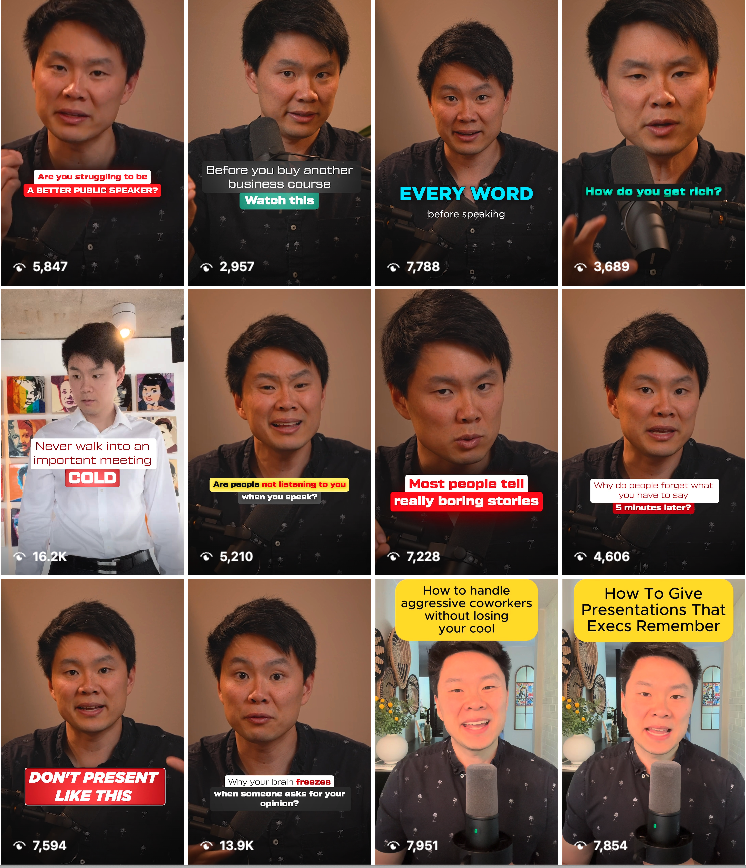
The worst part? I didn’t even notice at first because I was so busy producing. Head down, cranking out videos, following the routine. I’d batch-record 12 videos in one sitting, all the same format, same camera angle, same structure. Schedule them out for two weeks. Repeat.
Consistency was my whole identity. “Just keep posting” was the advice I gave other people. And I believed it.
But consistency without reflection is just running on a treadmill. You’re moving, you’re sweating, you’re not going anywhere.
The Plateau
Let me give you the actual numbers so you can see what a plateau looks like from the inside.
October 2023 was my best month ever. Multiple videos over a million views. Followers pouring in. I thought I’d cracked the algorithm.
By March 2024, my average video was getting about 40% of the views it got six months earlier. Same content quality. Same posting frequency. Same topics. The audience had just… stopped responding.
I looked at my analytics and saw something depressing: my top-performing videos from March 2024 were worse than my average-performing videos from October 2023.
And I was recording more than ever. Twelve videos in a batch session, all scripted the night before, all following the same hook-framework-payoff structure that used to work.
The batch recording was supposed to be efficient. It was. Efficiently mediocre.
The Framework That Changed Everything
I stumbled on Anne-Laure Le Cunff’s concept of “tiny experiments” through her book. Her framework is called Plus/Minus/Next, and it’s embarrassingly simple.
On the 1st and the 15th of every month, you sit down for 30 minutes and answer three questions:
Plus: What worked in the last two weeks? What got traction, felt good, or produced results?
Minus: What didn’t work? What flopped, felt forced, or wasted time?
Next: Based on those observations, what’s one small experiment to try in the next two weeks?
That’s it. Thirty minutes twice a month. I almost didn’t try it because it seemed too basic to matter.
The first time I did it, in April, my “minus” column was brutal. Same format every video. Same batch recording process. Same topics recycled from six months ago. No new formats tested in over four months. No data review in over two months.
I’d been on autopilot. Not lazy autopilot. Busy autopilot. Which is worse, because you feel productive while going nowhere.
The Four Experiments
Based on my first few Plus/Minus/Next sessions, I ran four experiments over the following months.
Experiment 1: YouTube long-form. I’d been avoiding YouTube because it’s harder. Short-form is fast. You script it in 20 minutes, record in 5, edit in 30. A YouTube video takes days. But my Plus/Minus/Next review kept showing me that my audience wanted depth. My best-performing shorts were always the ones with the most substance. So I started publishing one YouTube video per month. Not weekly. Monthly. Low commitment, just enough to learn.
Experiment 2: Reduced batch size. I cut my batch recording from 12 videos down to 5. Counterintuitive, since posting every day meant I needed more content, not less. But recording 12 at once was killing the quality. By video 8 my energy was gone. My delivery was flat. I was reading scripts like a teleprompter zombie. Five videos in a session meant each one got more energy and more takes.
Experiment 3: AI automation for content. Instead of manually writing every script, I started building automations to generate first drafts from my coaching call transcripts. This freed up 5-6 hours a week that I’d been spending on script writing. I wrote about this in detail a couple issues back.
Experiment 4: Product revenue. I’d been making money exclusively through coaching. One-on-one sessions, group programs, workshops. All traded time for money. I wanted to test whether my audience would buy a self-serve product. So I built a short course on impromptu speaking and sold it for $97. Small experiment. Low risk. Just to see.
What Actually Happened
Not everything worked.
YouTube long-form has been the slowest experiment to show results. My first video got 400 views. The second got about 600. Not exactly viral. But the comments were different from what I get on shorts. Longer, more thoughtful, people actually applying the advice and reporting back. That signal was enough to keep going.
Reduced batch recording made an immediate difference. My average view count went up about 15% within the first month. Not because the algorithm changed. Because the videos were just better. More energy, more natural delivery, sharper hooks.
The AI automation experiment turned into something I didn’t expect. What started as a personal productivity tool became a product idea (Script Loop, which I’m now building in public). The experiment escaped its box.
The course sold 47 copies in the first two weeks with minimal promotion. $4,559 from an experiment I almost didn’t run. Not life-changing money. But proof that the audience will pay for something beyond coaching calls.
What I Took Away From This
The biggest lesson isn’t about any specific experiment. It’s about the practice of stopping to look at what you’re doing.
I spent twelve months in decline because I never paused to ask why. I just kept doing the thing. More volume. More hours. More of the same. And more of the same gives you more of the same results.
Thirty minutes on the 1st and 15th of every month. That’s the whole system. Write down what’s working, what’s not, and what you’ll test next. Do the experiment for two weeks. Evaluate. Repeat.
It sounds almost insultingly simple. But the gap between knowing you should reflect and actually sitting down to do it is where most creators (including me, for twelve months) get stuck.
I’m not posting every day anymore. I post 5 times a week now instead of 7. I record in smaller batches. I spend the time I saved on experiments that might not work.
My growth is back. Not explosive. Steady. And it feels different this time because I actually understand why things are working instead of just praying the algorithm is in a good mood.
Preston
Get a new build-with-AI guide every week
Weekly playbooks on prompting, agents, and content systems — free.
You're in. First email lands shortly.