How I Reset My Life in One Day
It was January 3rd, 2026. I was on a 12-hour flight back from China, visiting my in-laws, when I listened to something that completely rewired how I think about my life: Dan Koe’s “How to Fix Your Entire Life in One Day.”
If you haven’t seen it, this piece has gone absolutely viral. Over 65 million views on X. More than 330,000 people have bookmarked it. And honestly, I get why.
The title hooked me because I was stuck. Even though I had grown to over 700K followers across Instagram and TikTok in two years, I couldn’t achieve my $10K/month goal. I never built a micro-SaaS, even though I’ve dreamed of doing it for years. Even worse, I felt like the daily grind of posting shorts for the algorithm was killing me little by little inside.
So with no Wi-Fi and nothing else to do, I gave it a try. What happened next was the biggest mindset shift I’ve had in years.
I’m going to share the full exercise I went through, including my actual answers. Some of this is uncomfortable to put out there. But one thing I realized through this process is that I’ve been filtering myself to protect an image. This article is me practicing the opposite.
If you’ve ever felt stuck in a lane you’ve outgrown, or caught yourself going through the motions without knowing why, I think you’ll find something useful here.
The Backstory: How I Got Stuck
To understand why this reset hit so hard, you need to know how I got here.
In 2020, I was at MIT Sloan working on my MBA while building an AI-powered public speaking startup. We were trying to become the Duolingo for public speaking, before AI became cool. We bootstrapped to about $50K in ARR. But it didn’t achieve the goal we’d set, and we eventually shut it down.
I got a full-time tech job. And after about a year in the gig, I was itching to start something of my own on the side.
So my wife suggested, “What if you taught public speaking on social media?”
It wasn’t a random suggestion. Communication was my thing for years. I majored in it at Stanford. While in school, I was a play-by-play radio broadcaster, and I became obsessed with studying how the legends like Al Michaels, Joe Buck, and Marv Albert spoke so fluidly and with so much energy on the spot. At MIT, I learned from over 100 communications coaches who advised us on our startup. I also taught public speaking courses at MIT Sloan to executive MBA students.
So I decided to try it. In August 2022, I made my first TikTok, which got a whopping…200 views…
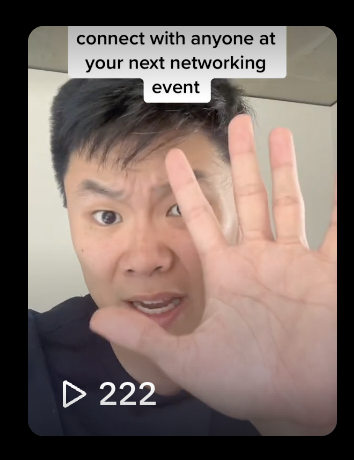
But I actually enjoyed making it! I liked going from idea to product in under 2 hours, and knowing that this video likely helped one person somewhere in the world. So I kept going.
I woke up at 5am before my day job to film content. I posted twice a day for 10 months straight. Then one day, I bought a $60 whiteboard from Target and randomly recorded a video teaching an impromptu speaking framework. It absolutely popped off.
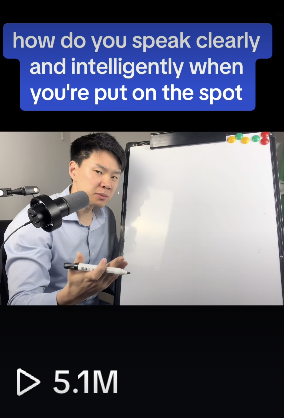
That video got more than 5 million views on TikTok. It became the foundation for a course I still teach and care deeply about: The Impromptu Speakers Academy.
From the outside, it looked like it was working.
But deep down, I was worried that “Preston the Public Speaking Coach” was becoming my identity. And I didn’t want to be a communication coach forever, since coaching wasn’t scalable.
Instead, I’ve wanted to build software for years, even though I’m not technical. I loved this idea of being able to impact millions of people around the world and help them at scale, not just in isolated one-on-one sessions. Maybe it’s an ego thing, but it’s the truth.
The Reality of Building on the Side
Before I go further, I want to be clear about something: this is not an article about going all in and neglecting your obligations.
I have a day job I enjoy. I’m a Director of Business Development at a B2B software company. I work 8-10 hours a day in this role, sometimes more. I travel regularly to conferences and partner events. It’s intense, but it’s the perfect job for an extrovert like me who actually likes to network.
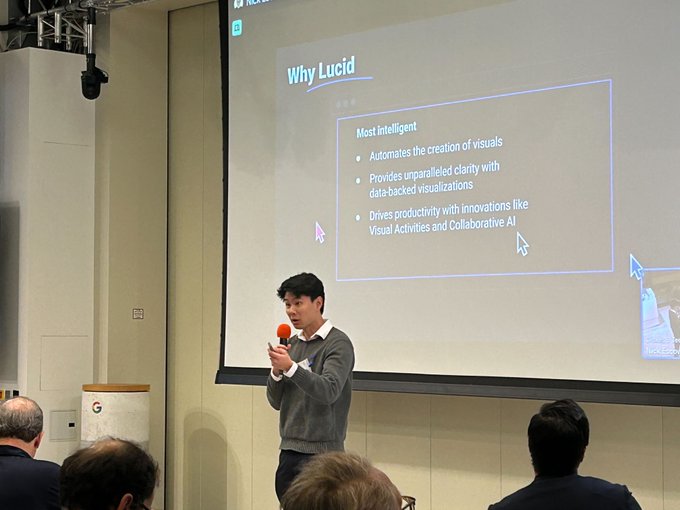
But I also have family commitments I care deeply about. Between my day job and my marriage, I realistically have about two hours in the morning, between 5:30 and 7:30am, and maybe another hour or two late at night to work on anything else.
When you have that kind of time constraint, it creates urgency. You can’t waste those hours on things that don’t compound. You have to find asymmetric bets: limited downside, unlimited upside.
That’s the whole reason I got into personal branding and content in the first place. It felt like an asymmetric bet. If you can get really good at either code or media, those are the levers that can create tremendous impact without requiring you to trade more hours for more output.
That’s what always appealed to me, not quitting my job to chase a dream. Just finding the right bets to make with the limited time I have.
But somewhere along the way, I lost sight of that.
The Trap of “Volume, Volume, Volume”
As I started getting more exposure to the creator world, I became obsessed with reverse engineering what full-time creators were doing.
I started following Ali Abdaal, Russell Brunson, Gary Vaynerchuck, and Alex Hormozi. I learned about the power of high-ticket sales, funnels, and converting audiences into customers. I joined Jay Clouse’s The Lab, a community of creators building their businesses. Most of them were full-time creators.
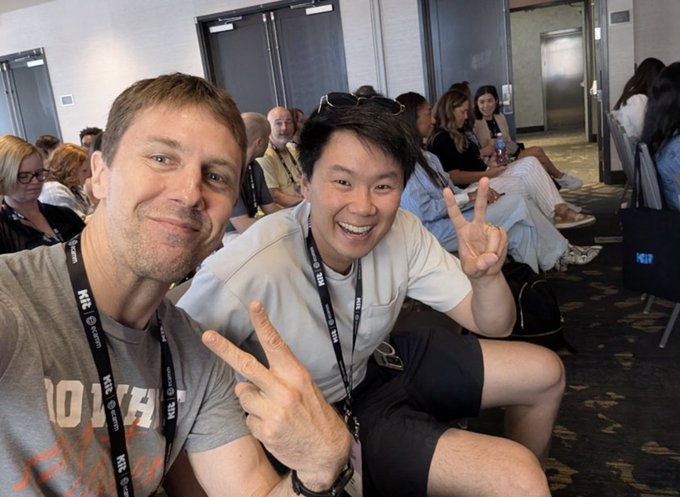
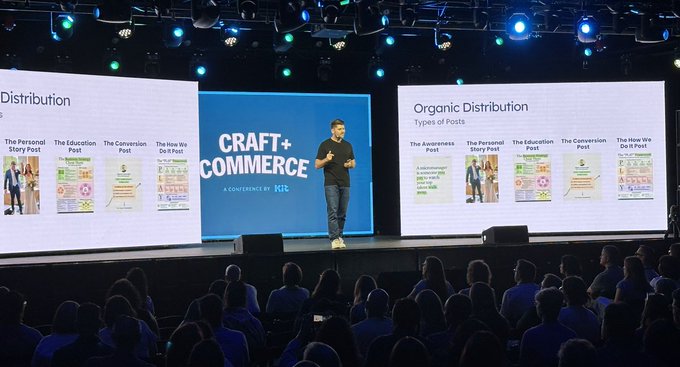
I attended my first ever creator conference, Kit’s Craft + Commerce, in Boise, Idaho.
My goal was to build a business where I didn’t have to rely on just one source of income. So I tried everything. Cohort programs. One-on-one high-ticket coaching. Lower-ticket offers. Different funnels. Newsletters every week trying to sell my products.
I posted 1-2 short videos every day for almost 18 months.
And somewhere along the way, I got away from the joy of creating to teach, with no expectation of anything monetary in return. The creative expression that got me started slowly shifted into optimization and sales.
Then my mom sent me a text I’ll never forget:
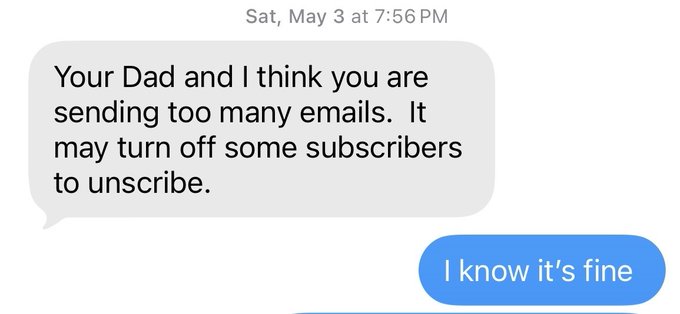
I made about $50,000 last year from my side hustle, mostly from digital courses. That sounds decent until you realize I had set this goal of $10,000 a month.
Every decision I made was reverse-engineered from that number. What funnel do I need? What price point? How many sales calls? And why the hell was I not hitting that number after trying so many things?
I was repurposing the same content just to check a box. I was posting for the algorithm, not for myself.
Meanwhile, my growth had stalled. I was stuck at 260,000 Instagram followers for over 1 year and lost all motivation to create.
The Identity Problem
For three years, every piece of content I created was about communication coaching. How to stop rambling, how to speak with confidence, how to nail interviews. It had worked. But now I felt completely boxed in.
I still loved teaching communication, but I wanted to talk about more than that:
- Experiment with AI tools in my day job and business
- Build software products
- Talk about being a creator while working full-time
- My love of the NBA and NFL
But I was scared. I had spent years building an audience that followed me for communication tips. If I started posting about unrelated topics, wouldn’t they leave?
Plus, creator friends and mentors advised against diversifying my brand. They said that doing both communication and build-in-public content would stretch me thin. It would confuse my audience.
So I did something that seemed smart at the time: I created a whole separate social media account called “Preston Chin Builds.”
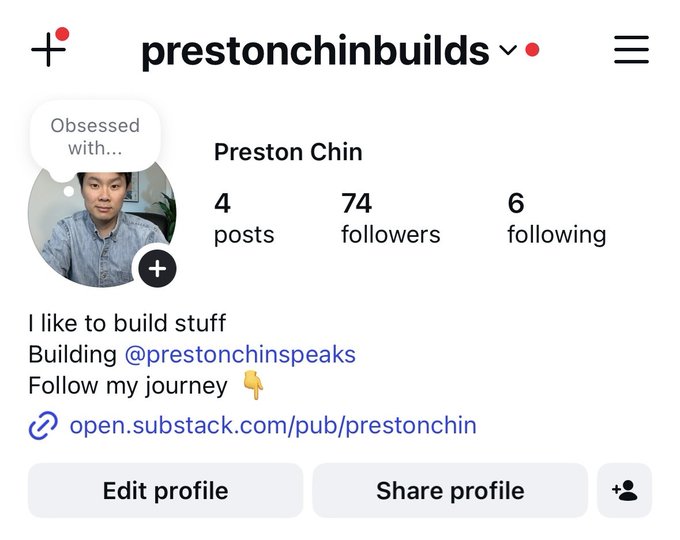
The idea was that I could talk about building in public, entrepreneurship, and AI without alienating my more corporate “communication coach” audience.
Except 3 months in, I barely ever posted on it.
I kept telling myself I’d start next week. I’d write a thread about AI tools. I’d share my automations running my business. But every time I sat down to do it, I felt this weird resistance.
I was betraying the audience I’d already built. I was being inconsistent. I was jumping on the AI bandwagon just because everyone else was.
So I stayed in my lane, posting the same frameworks and repeating the same talking points with different hooks.
And felt a little more dead inside each day.
The Pre-Work: What Reflection Taught Me (And What It Didn’t)
About two weeks before I found Dan Koe’s article, I did a reflection session using frameworks from Mel Robbins and Sahil Bloom. They asked questions like:
- What were the highs and lows of my year?
- What created energy vs. what drained energy?
- What were the “boat anchors” holding me back?
- What did I NOT do because of fear?
- What will I stop, start, and continue doing?
This was helpful. I identified patterns. But here’s what those exercises missed: they helped me see my behaviors, but they didn’t touch the core issue. I could list every pattern holding me back. None of that addressed why I kept defaulting to the same behaviors despite knowing better.
The answer was identity. I was clinging to “Preston the Communication Coach” because it felt safe. Letting go felt like losing something, not gaining something.
At the time, I didn’t have that language for it yet. But I got a glimpse of what was missing from watching how Sahil Bloom responded to criticism on social media.
Sahil had launched Wild Roman, a men’s skincare product. A lot of people online said it was a bad move, because it was such a deviation from his brand. He could have made more money faster a different way.
His response stuck with me:
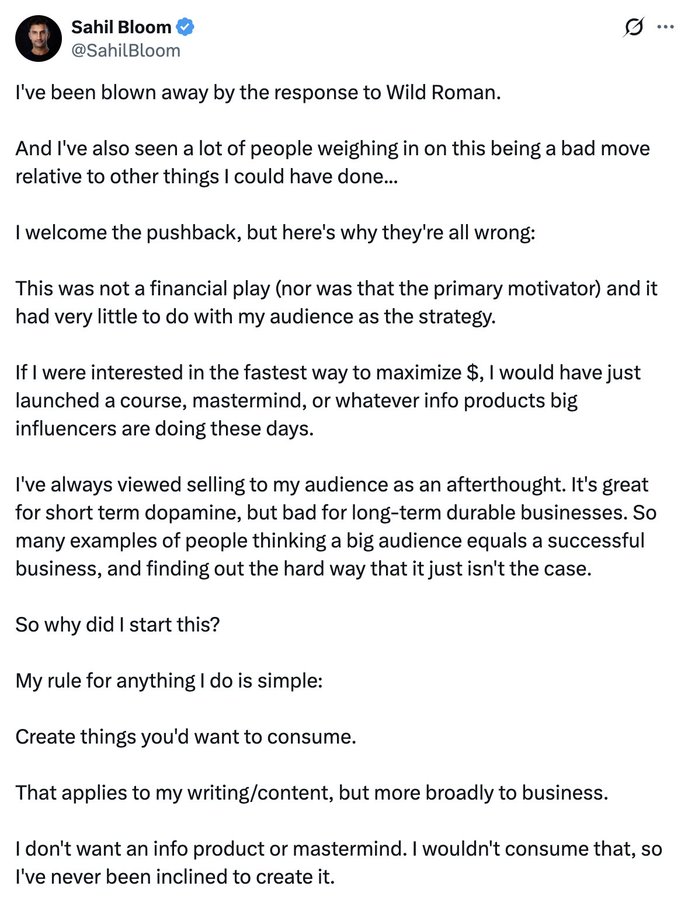
I realized I had been creating content I thought my audience wanted, not content I would actually consume myself. I had been building products to hit revenue targets, not products I was genuinely proud of irrespective of the financial expectations.
But even with that insight, I still wasn’t changing. I knew what I should do, I just wasn’t doing it. The reflection exercises had given me clarity on my behaviors, but they hadn’t given me a framework for reshaping who I saw myself as.
That’s when I found Dan Koe’s article. And it went straight at identity.
Why Dan Koe’s Method Worked When Other Reflection Exercises Didn’t
Regarding identity, this quote from Dan stuck the most with me:
“You want to achieve a goal. You perceive reality through the lens of that goal. You only notice ‘important’ information and ideas that allow you to achieve that goal (learning). You act toward that goal and receive feedback that you are progressing toward it. You repeat that behavior until it becomes automatic and unconscious (conditioning). That behavior becomes a part of who you think you are (‘I am the type of person who…’). You defend your identity to maintain psychological consistency.”
I was stuck because I was defending an identity that no longer served me, not because I lacked discipline or clarity.
The other reflection exercises helped me see my situation clearly. Dan’s method made me feel the cost of staying the same, so viscerally that I couldn’t unsee it. Once I understood that identity was the blocking point, I was ready to go all-in on his exercises.
A note before we dive in: The next sections may feel repetitive. That’s intentional. I’m walking you through each question in detail, with my actual answers, so you can see the depth of this process. The breakthrough comes from sitting with the discomfort. My hope is that by showing you exactly how I went through this, you can experience a similar breakthrough for yourself.
The Dan Koe Method: A Full-Day Exercise in Three Parts
Dan structures the exercise into three parts, designed to be completed over the course of a single day:
Part 1: Morning (Psychological Excavation). You dig into your current dissatisfaction, create an “anti-vision” of what your life becomes if nothing changes, and then create a vision of who you want to become.
Part 2: Throughout the Day (Interrupting Autopilot). You set reminders to check in with yourself at random times, asking questions designed to catch you in real-time patterns.
Part 3: Evening (Synthesis). You name the internal enemy that’s been holding you back, compress your insights into single-sentence mantras, and create a “video game” framework with goals, projects, and constraints.
I followed this structure verbatim. Here’s what happened.
Part 1: Morning
The first part starts with getting brutally honest about what you’re tolerating. Before you build a vision for what you want, you have to see clearly what you’ve been accepting.
The questions that hit hardest:
“What is the dull and persistent dissatisfaction you’ve learned to live with?”
My answer: I’ve learned to tolerate spending the majority of my time on things that don’t scale while the work that truly excites me gets squeezed into the margins. I’ve let output-chasing and external validation distract me from creating for creating’s sake.
Every day I’d wake up with a to-do list of 8 to 10 things. Creating a new landing page. Updating my email funnel. Repurposing content for different platforms. Drafting my newsletter. Prepping for coaching calls. And at the end of the day, I’d accomplish maybe one or two of them at best. Or I’d spread myself so thin across all of them that none of them actually moved the needle.
I was checking boxes, not building anything meaningful.
“What do you complain about repeatedly but never actually change?”
I wrote down three:
- “YouTube is too hard”
- “I’m not technical, so I can’t build software”
- “I only put out communication videos”
“For each complaint, what would someone who watched your BEHAVIOR (not your words) conclude that you actually want?”
“YouTube is too hard” --- My behavior revealed I didn’t actually want to get good at YouTube. I wasn’t studying packaging. I wasn’t running experiments. I was throwing things at a wall, not iterating deliberately.
“I’m not technical” --- My behavior revealed I wanted the idea of building software more than the discomfort of learning. I bookmarked tutorials on X but never acted on them. I started projects and stopped when I hit walls.
“I only post comms videos” --- My behavior revealed I was scared to be my full self. I created Preston Chin Builds as a safety net and then never posted on it.
“What truth about your current life would be unbearable to admit to someone you deeply respect?”
This one hurt. I haven’t made as much money from my business as I wanted. And even though I tell myself I shouldn’t care, I do care. I got jealous of creators boasting six- and seven-figure earnings doing what they loved. It’s hard to separate my self-worth from financial success.
Beyond that: there isn’t a single software project I’m proud of. I’m not proud of any YouTube video I’ve put out. The short-form videos that went viral feel like luck, not skill. The content I’ve created doesn’t reflect who I actually am.
The Anti-Vision
This is the part that changes everything.
Dan has you project forward: 5 years, 10 years, end of life. You describe in painful detail what happens if nothing changes.
5 years, nothing changes. Describe an average Tuesday:
I wake up bloated, sluggish. I look in the mirror and want to slap my face. I’m grinding at a job I’m not passionate about. Maybe I’ve advanced, but I’m still working my ass off for something that’s not mine. My wife is frustrated because I’m never fully present. I can’t really see my kids.
My side hustle is still a mess of half-finished initiatives. I’m still waking up to a to-do list of ten things and completing two at best. Still spreading myself across landing pages, funnels, newsletters, and coaching calls. None of it compounding into anything real.
At night, I’m doom-scrolling, watching people who said they “couldn’t build anything” now living the life I wanted. Building software used by millions of users. Creating videos about their journey. Loyal followings. And I’ve done none of that.
10 years, nothing changes:
I’ve missed the AI wave entirely, never built a single thing. What do people say about me when I’m not in the room? “He’s a really nice person, but he has no follow-through.” All talk, no action.
End of life, safe version:
A life full of regret, disappointment, and the haunting feeling: “I could have done so much more.” I never let myself feel what failure truly feels like. I cared so much about stability that I never shot for the moon. If I never try, I’ll feel like I totally wasted my time.
I couldn’t be the inspiration to my kids that my father was to me.
The Identity Question
Then Dan asks:
“What identity would you have to give up to actually change?”
I’ve always been a people-pleaser. I knew this about myself on the surface, but I didn’t realize how much it was running my decisions. Every content choice, every product launch, every pivot I avoided. All filtered through “what will people think?” and “will they still like me if I change?”
Sitting with this question forced me to confront that pattern directly. I had to admit what I actually wanted, irrespective of other people’s validation.
I wrote:
“Just a communication coach.” I don’t need to be seen as someone who only puts out communication content. There’s so much more to me.
“Because I’m non-technical, I’m not meant to build software.” This identity is a shield. With the tools available today, I need to give myself the space to learn and play on my personal projects.
“The person who optimizes for money.” This one was harder to see, but it was running the show.
I’ve always believed that money is a byproduct of impact. Help enough people, create enough value, and the money follows. That part I still believe.
But somewhere along the way, I started optimizing for money directly. And it wasn’t random. I had real reasons.
I want to be able to take care of my in-laws if they ever decide to move to the US from China. I want to give my future kids the best education and access to any extracurricular activities without thinking twice, just like my parents gave me. I want to take my wife on first-class trips around the world without batting an eye, because the experience is worth it and I didn’t want to feel like I had to compromise. I want a big house. Financial freedom. The ability to do what I want, when I want, and take care of the people I love without constraints.
Those desires aren’t bad. But they started influencing every decision I made.
I launched cohort-based programs because I heard group coaching was a great way to scale revenue. I set audacious goals of $30,000 a month. Not a single cohort I promoted ever hit more than $10,000. And running them was exhausting, especially with a demanding day job.
My wife would always tell me: “You should be doing something that creates momentum and energy, not chasing the money.”
She was right. But when I saw how palpable the money felt watching other creators online talk about their funnels and success metrics, it made me think: “Hey, maybe this is actually quite attainable sooner than I thought.”
So I started working on timelines. “I’m going to try to make X money in the next three months.” I optimized my decisions around that number. And I completely lost sight of why I was creating content in the first place.
I started because I loved to teach at scale. The creators I admired most were the ones who just put out value. I never had to worry about being sold a bunch of stuff. I lost sight of that.
I was also optimizing for quick wins. Short-form social media gives you results right away. A reel hits, you feel good. But YouTube takes craft. Packaging. Iteration. Depth. I kept choosing the short win over the meaningful work. So much so that I hadn’t felt proud of anything I’d created in a while.
“What is the most embarrassing reason you haven’t changed? The one that makes you sound weak, scared, or lazy rather than reasonable?”
I’m afraid of losing the respect and liking of my followers. I’m afraid of alienating them. People will think: “What the hell? Why did he go from communication to something else? He should have just stuck with communication. That was unique.”
That’s embarrassing to admit, but it’s true.
The Vision
Then you flip it. Same level of detail, but for the life you actually want.
“Forget practicality. If you could snap your fingers and be living a different life in 3 years, what does an average Tuesday look like?”
I wrote:
I wake up next to my wife. I’m fit. I worked out yesterday and I feel good about myself. I spend the morning present with my toddler, no phone at the table, enjoying their laugh and cleaning up their half-eaten breakfast. Then I walk into my home office and work on software projects I’m genuinely excited about, building alongside my longtime friend from high school, Jimmy. We’re running bootstrapped, profitable SaaS businesses used by tens of thousands of people.
I create a YouTube video documenting something I’ve learned. The video I published last week is resonating. People are saying it helped them. I then tinker with a new software that could help me run our business. I get a 30-min HIIT workout in before 3pm. I then close my laptop, done for the day and ready to pick up my baby from daycare.
What’s notably absent: No forced posting schedule. No coaching calls I’m dreading. No newsletter published just because it’s Tuesday. No chasing small revenue wins. No doom scrolling watching others build.
Part 2: Throughout the Day
This is what most reflection exercises miss.
Dan has you set reminders throughout the day to interrupt autopilot:
- 11:00am: What am I avoiding right now?
- 1:30pm: If someone filmed the last 2 hours, what would they conclude I want?
- 3:15pm: Am I moving toward the life I hate or the life I want?
- 5:00pm: What’s the most important thing I’m pretending isn’t important?
- 7:30pm: What did I do today out of identity protection rather than genuine desire?
- 9:00pm: When did I feel most alive? Most dead?
I did this on Sunday, January 4th, 2026, the day after landing home. I had a whole day to myself, which meant I could fully experience what my ideal life would actually feel like.
The results surprised me.
By 11am, I spent 2 hours deep in YouTube packaging work: titles, thumbnails, concepts. I used Nano Banana Pro to create thumbnail concepts. I wasn’t worried about checking “YouTube” off my list. I was happy that I got experience mocking up title and thumbnail combos that I could pass off to my editor for refining.
At 1:30pm, I had just finished a 2.5-hour call with Jimmy about forming a holding company together and building our first app. The call was supposed to be an hour but it went long. Even though we’re across the country from one another and we’re very early in our journey together, I can feel the energy through the screen. We’re nerding out over pain points creators like me face that we could solve with software.
At 5pm, I asked myself: “What’s the most important thing I’m pretending isn’t important?”
The answer: Me coding prototypes with agents. Learning to build with AI as a non-technical founder. I kept telling myself it wasn’t worth focusing on because coding is not my natural strength (I’d tried and failed to learn coding several times).
But with AI now, it’s absolutely worth me revisiting. So my goal is to prototype my next app and more importantly learn how to build with AI.
At 7:30pm: “What did I do today out of identity protection rather than genuine desire?”
My answer: Nothing.
The things I would normally do out of identity protection (prepping for coaching calls, forcing out a Tuesday newsletter, reposting content just to stay “active”), I didn’t do any of them. And I felt better for it.
At 9pm: When did I feel most alive?
Talking to Jimmy. Working with AI tools. Experimenting with MCPs and Claude Code. Doing tangible tasks that moved something forward.
When did I feel most dead?
I couldn’t identify a single dead moment. The whole day felt energizing.
And while not every day will always be energizing, I feel privileged to know what juices me so that I can make the most of my “free” time.
Part 3: Naming the Enemy
At night, you synthesize everything into a clear diagnosis.
“What is the actual enemy? Not circumstances. Not other people. The internal pattern.”
My answer: Ego protection disguised as reasonableness.
I told myself rational-sounding stories: “YouTube is hard.” “I’m not technical.” “I should focus on what I’m good at.” But underneath those stories was a deeper pattern: I hate feeling stupid and incapable, so I shut down before I can be judged.
I wanted the idea of building more than the discomfort of failing publicly while learning.
The Compression
Dan then has you compress everything into single sentences.
Anti-Vision (what you refuse to become): “I refuse to become the guy who had the work ethic and the vision but never shipped anything because he was too scared to fail publicly.”
Vision (what you’re building toward): “I’m building a life where I ship software with people I love working with, create multi-dimensional YouTube content I’m genuinely proud of, and grow an organic audience around what actually interests me. Ending each day fulfilled, not drained.”
These have become my mantras.
Turning Life Into a Video Game
Dan ends with a framework that made everything click: treat your life like a video game.
- Anti-Vision = What’s at stake if you lose
- Vision = How you win
- 1-Year Goal = The mission
- 1-Month Project = The boss fight
- Daily Levers = The quests
- Constraints = The rules
This is mine:
| Anti-Vision | ”Nice guy, no follow-through, missed the AI wave, never shipped. Too scared to fail publicly.” |
| Vision | ”Ship software, create long-form content, and learn something new” |
| 1-Year Goal | 1 software product with paying users + 25 YouTube videos on varied topics |
| 1-Month Project | First MVP shipped + 2 YouTube videos |
| Daily Levers | YouTube packaging, build with Jimmy, post on X |
| Constraints | No coaching beyond 2x per month. No forced Tuesday newsletters. No shorts just for traffic. |
The constraints were just as important as the goals. They told me what I was saying no to so I could say yes to what actually mattered.
How to Do This Yourself
If you want to try this, the core of the exercise is simple: spend a full day excavating what you’ve been tolerating, create a visceral anti-vision of what happens if nothing changes, then build an equally detailed vision of the life you actually want. The magic is in making the cost of staying the same feel so real that your old patterns become repulsive.
The two things that made the biggest difference for me: the anti-vision exercise (projecting forward 5, 10 years and end of life if nothing changes) and the identity question (what identity would you have to give up to actually change?).
Here’s the fastest way to do it:
1. Copy Dan’s full article into Claude.
Go to Dan’s original article and paste the entire thing into Claude (or ChatGPT). Then use this prompt:
“You are Dan Koe, who has just written this article. You’re now my life coach, helping me go through this self-reflection exercise to reset my life in a single day. Ask me these questions one at a time. For each answer, I’ll share my unstructured thoughts. After each response, distill what I said, reflect it back to me, and ask any clarifying questions that might help me unlock a deeper discovery before moving to the next question. Start with the first question.”
This turns the exercise into a conversation. The AI will guide you through each step, push you to go deeper, and help you synthesize your thoughts in real time. It’s like having a coach in your pocket.
2. Use voice-to-text to capture your thoughts (optional but recommended).
I use Wispr Flow. It lets you speak your answers instead of typing, but I’ve heard tools like Superwhisper, Otter, and MacWhisper could work too. This is especially useful for the excavation questions, where you want to get into a flow state and let your thoughts pour out without the friction of a keyboard.
Speaking out loud also forces you to be more honest. It’s harder to filter yourself when you’re talking than when you’re writing.
Why I’m Actually Excited for 2026
Coming out of this exercise, something shifted in how I think about what I’m building.
For years, I was optimizing for money. $10K/month. Revenue goals. Funnels. Conversion rates. Every decision got filtered through “what pays more right now?” And that filter consistently pointed me toward safe, incremental, short-term choices. The kind of choices that cap your upside.
Vas on X put it better than I could in his piece “Forget About the Money”:
“When you’re obsessed with money, every decision gets filtered through ‘what pays more right now?’ and ‘does my net worth increase or decrease as a result of this action?’ It is impossible to think long term with this mentality…
When you’re obsessed with the work, you make decisions based on ‘what compounds’ and ‘what can I spend the rest of my life doing because I truly enjoy it?’ Those decisions may look stupid in year one, reasonable in year three, and brilliant in year ten.”
He calls money “a waste product.” Not something to chase directly, but a byproduct of doing noteworthy work you enjoy and are good at. The money shows up as exhaust from the engine.
He also talks about asymmetric bets:
“A smart risk is asymmetric: limited downside, unlimited upside. Starting a company while employed? Asymmetric. Worst case, the company fails and you still have your job. Best case, it works and you build something real.”
That’s exactly what I’m doing. I have a day job I appreciate. Within a week of doing this exercise, Jimmy and I officially incorporated Trove, our holding company for building software products around problems we actually face. Our first product is Melda, a tool that helps creators repurpose their long-form coaching calls and videos into short-form scripts. We also launched Create in Chinese, which helps Western creators translate and post their content on Xiaohongshu (Red Note), China’s biggest social platform. And we have a lot more we’re cooking this year.
I’m no longer optimizing for money. I’m optimizing for work I’d be proud of. Work that compounds. Work I’d do even if no one was watching.
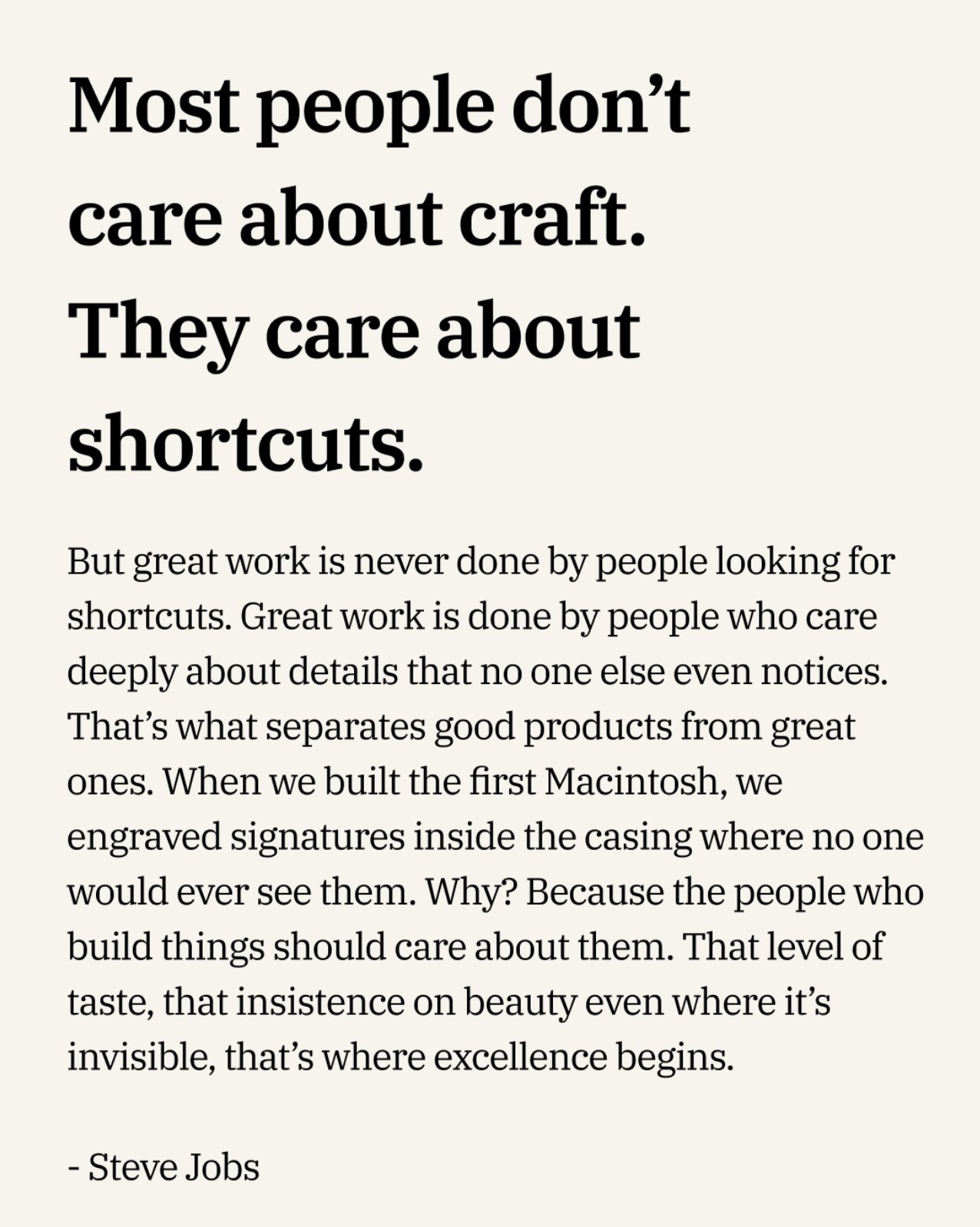
That’s what I want. The craft.
I’m not saying 2026 will be easy. But for the first time in a while, I know exactly what I’m building toward, and exactly what I refuse to become. That clarity is everything.