5 Ways to Speak Better on Camera
Read Time: 5 Minutes
I didn’t really appreciate the art of speaking on camera until I started making videos about four years ago.
At the time, I was a complete stiff.
I sounded way too robotic. I over-gestured.
It seemed like I was presenting to a room of hundreds when in reality, I really just wanted to come off as more personable.
Even when I read from the teleprompter, I thought that focusing less on the words and more on my delivery would improve.
But no matter how hard I tried to be myself, something about hitting the record button subconsciously made me speak like a completely different person.
And here’s the honest truth. If your delivery sucks, you won’t get views. You won’t go viral.
But even if you’re not a creator, no one will take you seriously when you give demos, interviews, or give speeches to your team.
Four years later, I’ve worked on this skill nearly every single day. And while I’m not perfect, I’ve studied some of the top communicators in the world on camera and have adapted my style based on their winning traits.
Here are the biggest tips I wish I knew four years ago.
1. Start with the emotion
Trying to memorize a full script makes you focus on the wrong things. The viewer can see you over-fixate on trying to come up with the next sentence, instead of communicating more raw, cohesive ideas.
So if you’re recording videos like short-form content, record one line at a time.
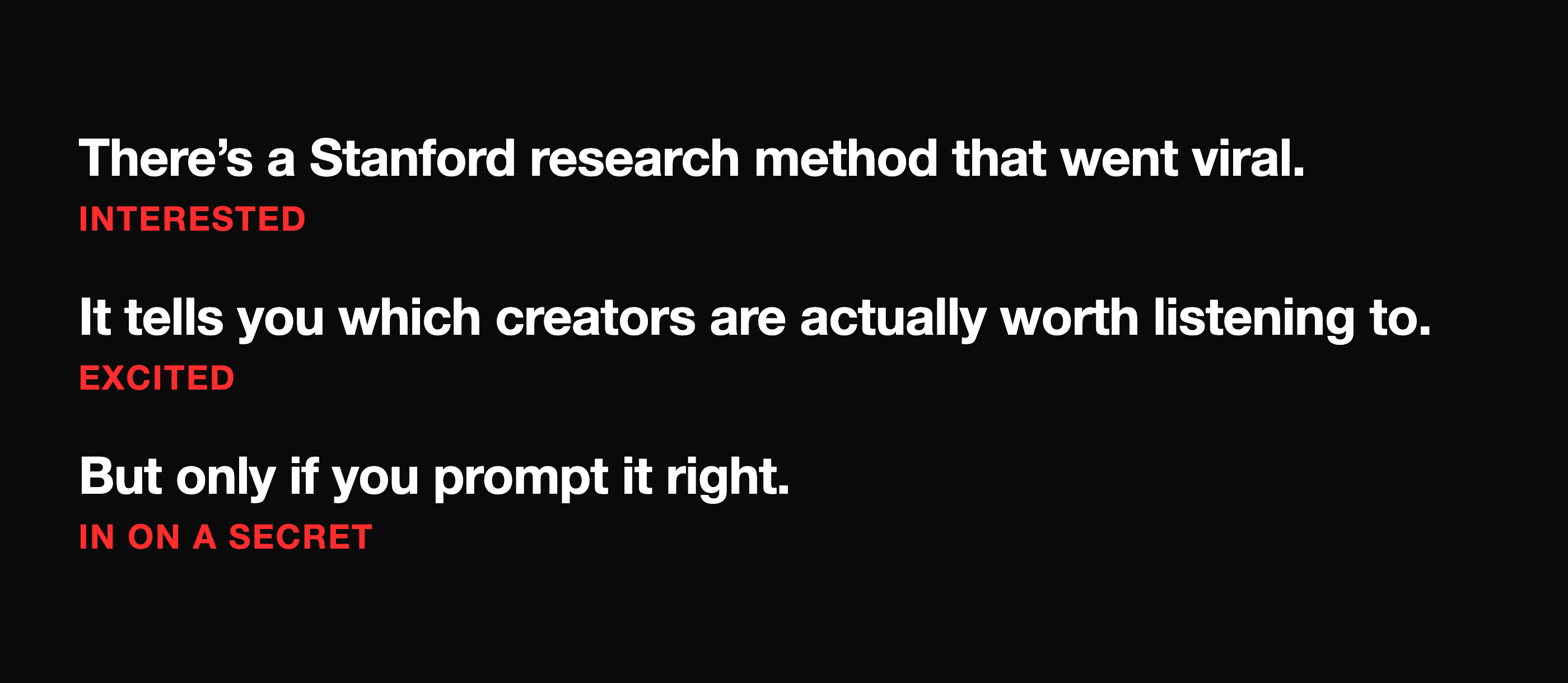
Read the line, internalize it, and then decide what emotion you’re overtly or subtly trying to convey with each sentence.
Here is what it looks like on the page. I write the script, then in the margin beside each line I write one emotion. Those red words are the only direction I give myself before I hit record.
If you’re delivering your message live on camera, you obviously don’t have this luxury. But you can map your message to a framework.
And for each section of the framework, you can write down the general emotion you want to convey.
For example, in this video you can see how I prepared the intro to a speech. I followed a four-part intro framework, and in each section you can feel the emotion that I’m trying to convey.
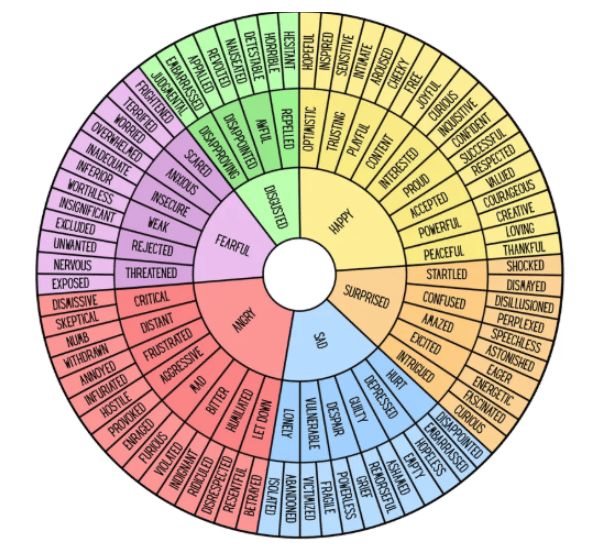
If naming the feeling is hard for you, borrow the Feelings Wheel. Seven core emotions in the middle, more specific ones as you move out.
2. Watch Yourself On Mute
Record yourself for 30 seconds. Then, play it back with the sound off.
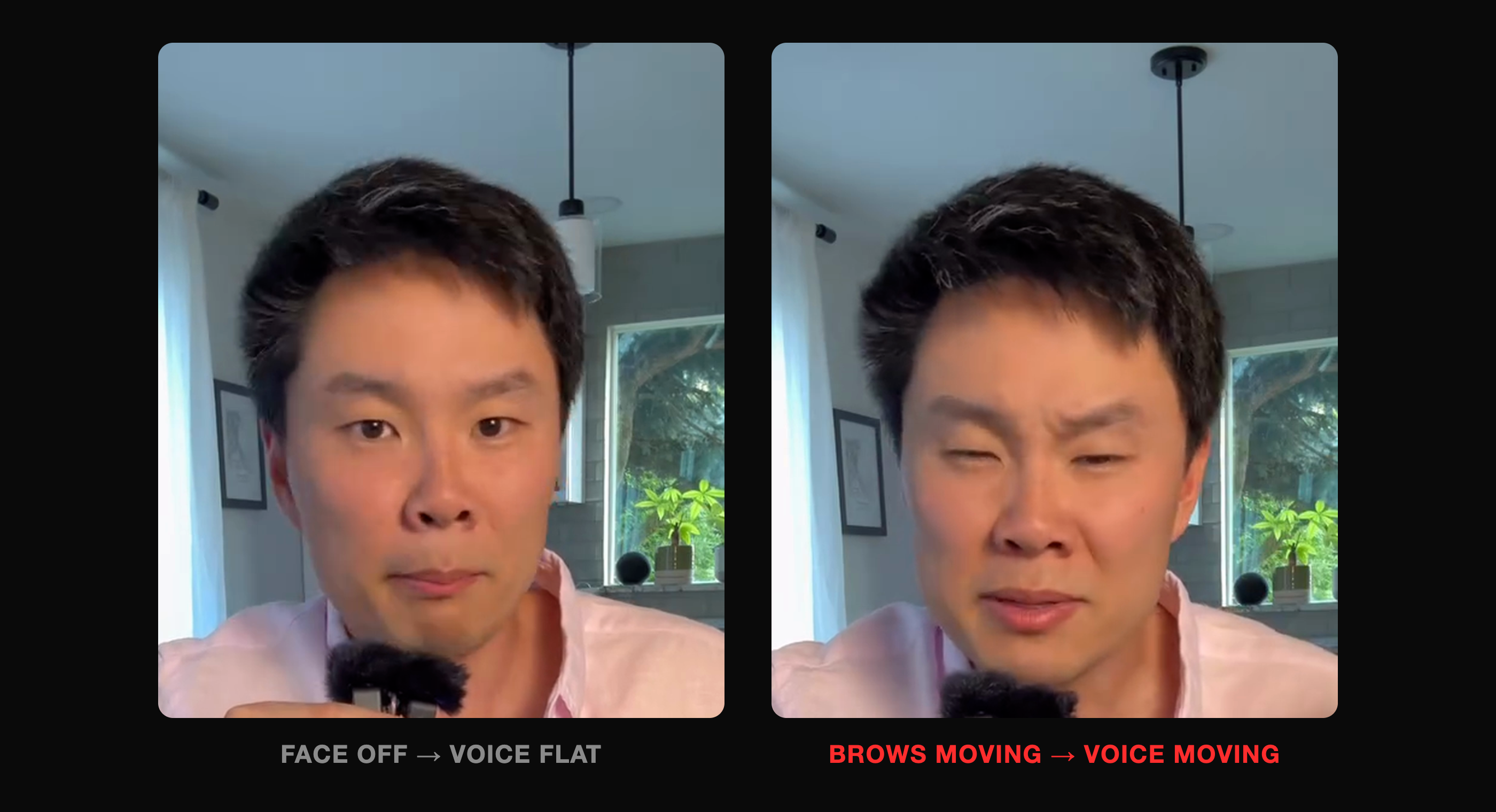
Study your eyebrows and the corners of your eyes.
When they move, your voice carries more range. When your face freezes, you sound more monotone.
There is a physical reason the corners of your eyes matter.
A real smile, the kind researchers call a Duchenne smile, lives in the muscles around the eyes rather than the mouth, and it changes the warmth in your voice before you say a word.
I train myself to speak with a smile by pulling the corners of my mouth back with my fingers for thirty seconds while I read a paragraph out loud.
It makes you look and sound ridiculous, so practice this privately, but it totally works.
Run the mute test on your last three videos before you record the next one.
3. Speak to one imaginary person.
This is particularly important when you are speaking in a smaller group setting or want to come off as more approachable and conversational.
Put a chair in front of you and picture a friend sitting in it. In my reel I used my dog Bobo, who slept through the entire recording.
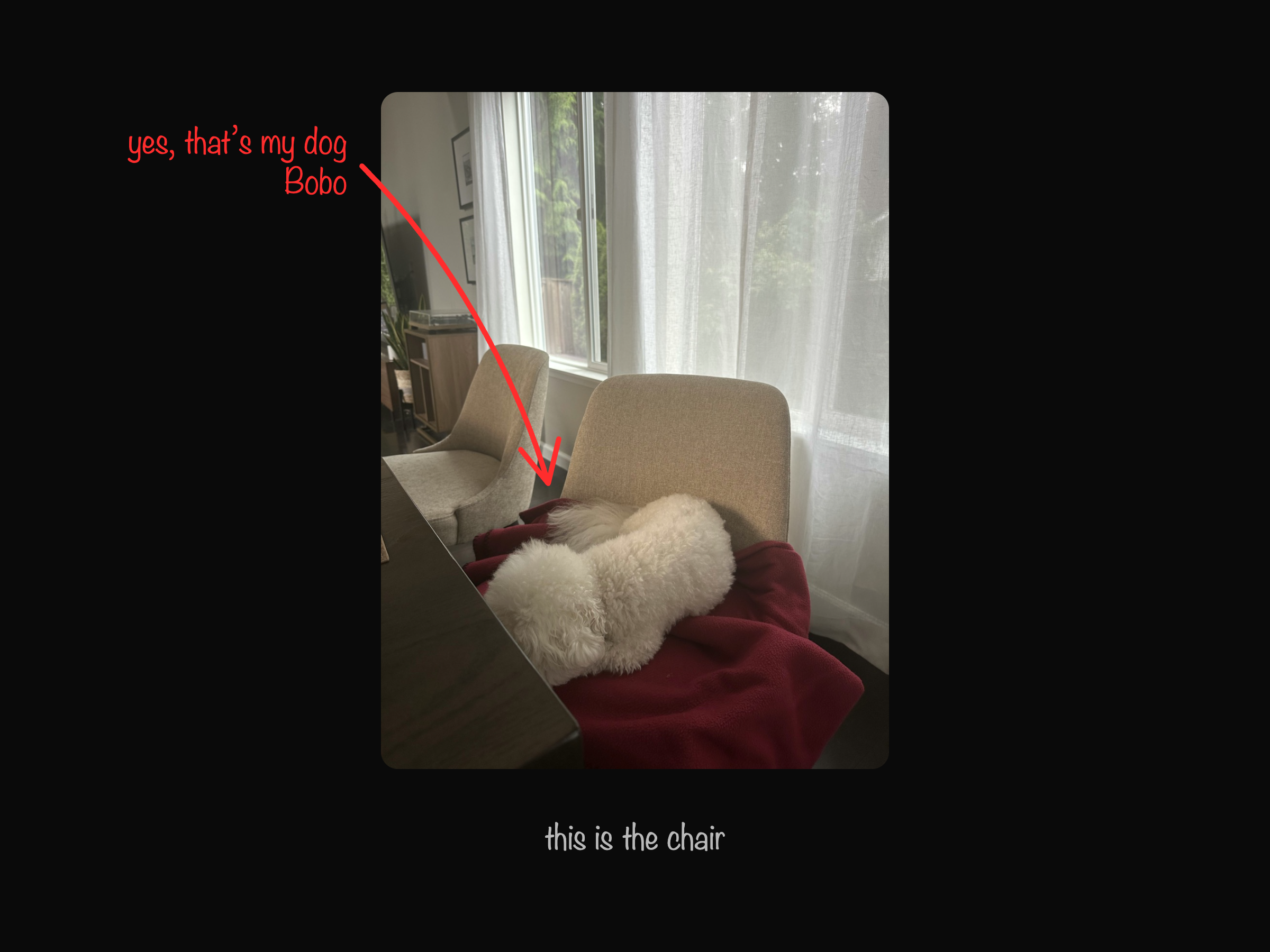
The key is to notice how you adjust your body language, which, in turn, impacts your volume and tone.
You’ll sit closer to the front of the chair. You’ll lean in a little. Your arms will settle instead of floating around looking for something to do.
Hands are the question I get most, and the key is placement. I recommend keeping your arms rested on the table as your neutral position, and only bringing them up to emphasize an important point.
Don’t overthink this portion. It’s better if your hands never move than flail (too distracting).
Tldr, when your body is relaxed, everything about your delivery lowers a few notches. Which can be a good thing when you want to be more casual.
4. Let meaning control your pace
Do not mark spots in your script where you plan to speed up or slow down. When you plan this, it sounds like you’re overperforming.
Speed up when you are genuinely excited. Or speed up when you have a bunch of details that you want to share, but the details aren’t important.
Slow down when you need to land a certain key takeaway.
What gives you control is the pause. Treat the periods in your script as real stops and hold at least a full “One Mississippi” of silence before the next sentence.
When I practice alone I tap my leg once between sentences so I can feel the gap.
If you struggle to add variety to your pace, 9 times out of 10 it has to do with you saying too many filler words.
I strongly recommend going through this video if you’re struggling with this.
5. Use Roundtable Volume
Stage volume is too big for a camera sitting eighteen inches from your face.
But on the other hand, whispering puts too much strain on the user who’s trying to follow along.
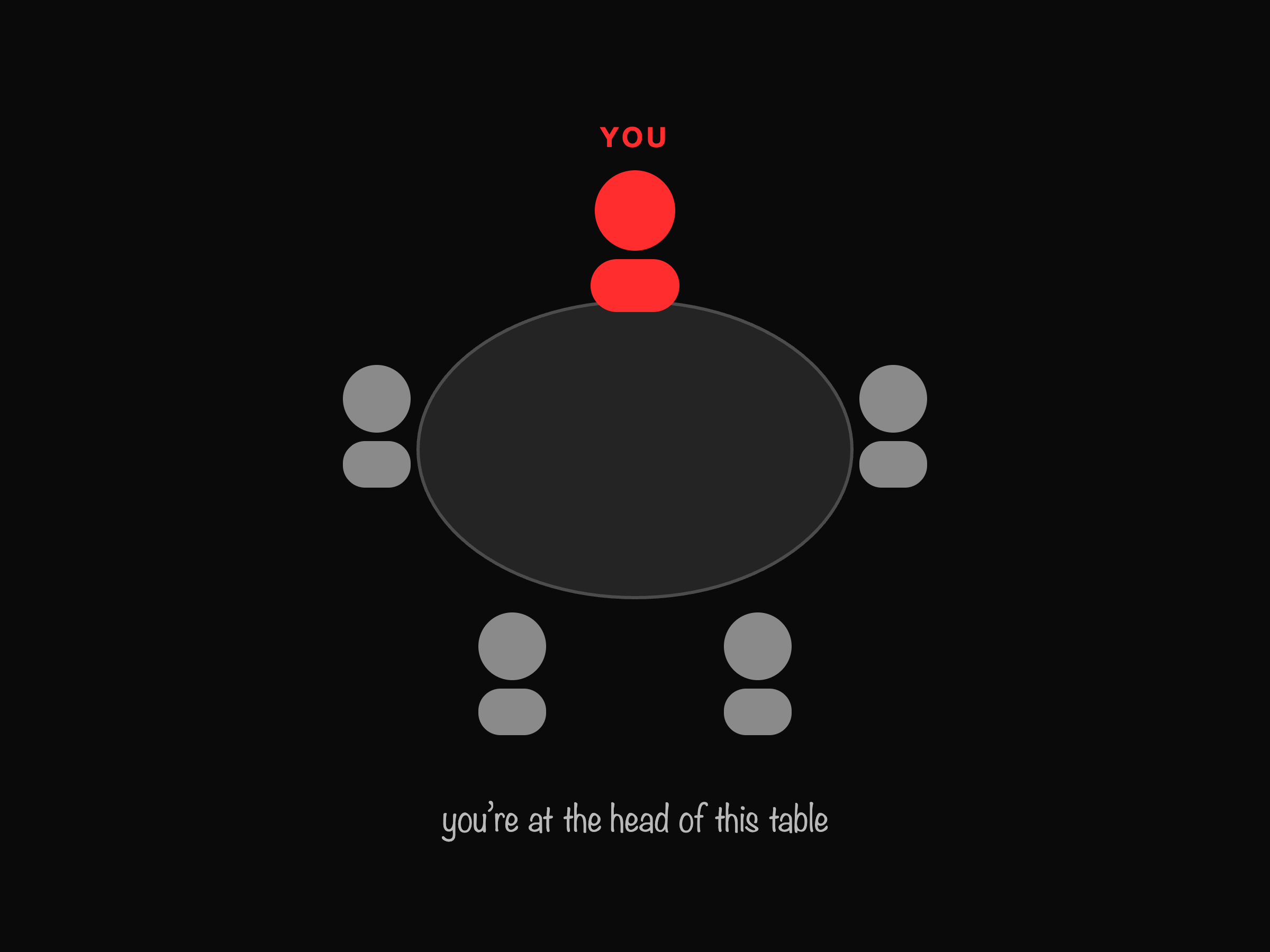
Instead, I like to picture myself at the head of a round table with four or five people at it. Use the volume that lets everyone there hear you without leaning in.
If you’re used to speaking on a stage or a big meeting room, roundtable volume will feel about 30% quieter.
If you found this helpful, you’ll love The Impromptu Speakers Academy. It’s my flagship program that’s helped hundreds of students master on-the-spot speaking in just 20 days to grow in their careers. The next cohort begins this Thursday.
Preston
If you liked this, you'll enjoy these

Want me to train you or your team?
1:1 executive coaching
4 to 6 weeks of 1:1 coaching for your biggest moment: a keynote, a board meeting or an investor pitch. You'll walk in prepared and still sound like yourself.
See 1:1 executive coaching →Corporate trainings
Live communication training for teams that present, pitch and answer hard questions every week. Everyone practices on their own real work, out loud, with notes from me.
See corporate trainings →Get free weekly communication tips
Actionable speaking and writing advice every Tuesday.
You're in. First email lands shortly.